Swift Be Thy Flight: Percy Bysshe Shelley's "To Night" (Excerpt)
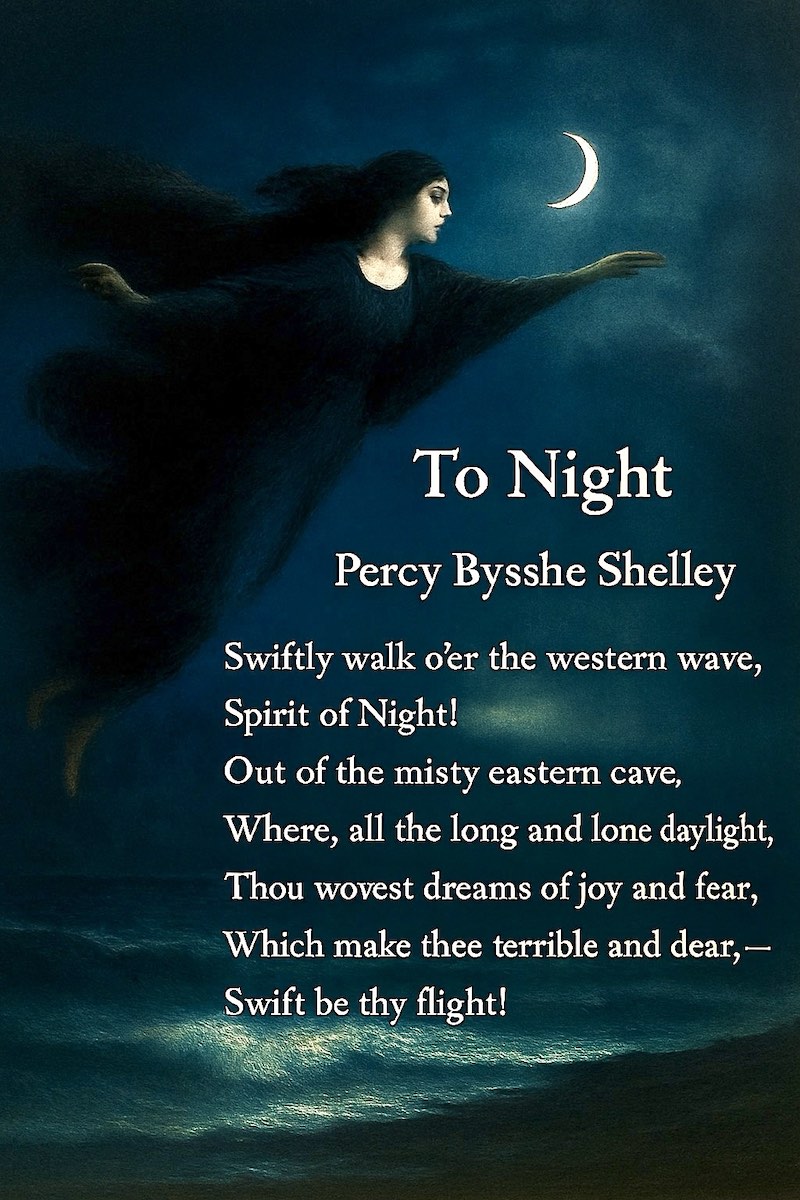
Published posthumously in 1824, "To Night" is a masterful example of the lyrical intensity of Percy Bysshe Shelley, one of the major English Romantic poets. Shelley was a revolutionary spirit who often found his greatest inspiration in the sublime forces of nature. By focusing specifically on the first stanza, we witness the poet’s invocation of the Night not as a mere absence of light, but as a living, breathing entity that offers a sanctuary from the "lone daylight."
The Poem (Excerpt)
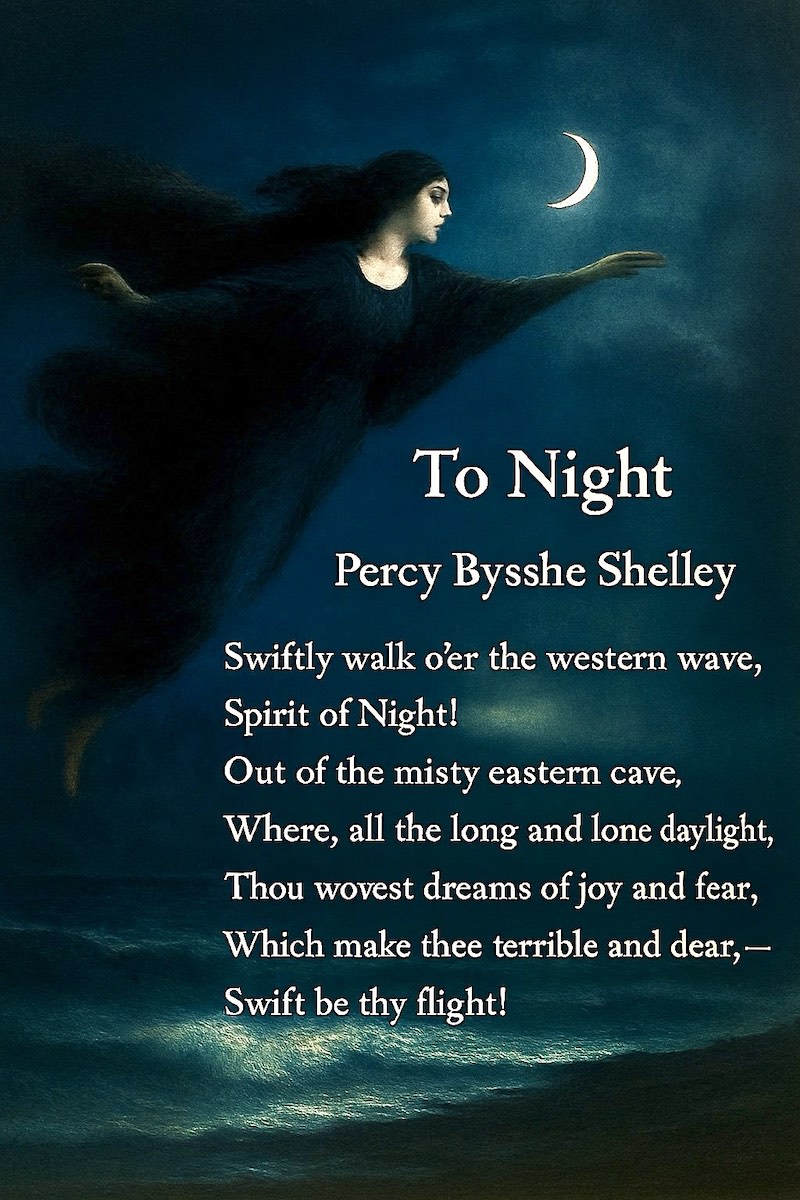
Swiftly walk o’er the western wave,
Spirit of Night!
Out of the misty eastern cave,
Where, all the long and lone daylight,
Thou wovest dreams of joy and fear,
Which make thee terrible and dear,—
Swift be thy flight!
The Insight: Swift Be Thy Flight
The stanza offers an intense summary of the desire for solace and psychological escape. By personifying Night as a traveling spirit, Shelley frames the darkness not as a symbol of death or fear, but as a long-awaited sanctuary from the exhausting demands of the waking world.
Shelley utilizes dynamic movement and geography to establish the poem's urgent tone, charting Night's journey from a "misty eastern cave" across the "western wave." This fluid, sweeping movement gives the darkness a tactile momentum, turning a daily astronomical shift into a conscious act of grace. The juxtaposition of "joy and fear" highlights the dual nature of our subconscious dreams, recognizing that the dark brings a complex emotional landscape that is simultaneously unsettling and deeply comforting.
The core philosophical "takeaway" anchors itself in the desperate refrain, "Swift be thy flight!" Shelley's plea reveals a profound weariness with the "long and lone daylight," suggesting that the conscious world can often feel isolated and burdensome. The call for Night is a reminder of our universal need to surrender control, to step away from the harsh light of reality, and to find peace within the quiet, shadowy spaces where the mind is finally free to rest.