Industrial Majesty: Walt Whitman's "To a Locomotive in Winter" (Excerpt)
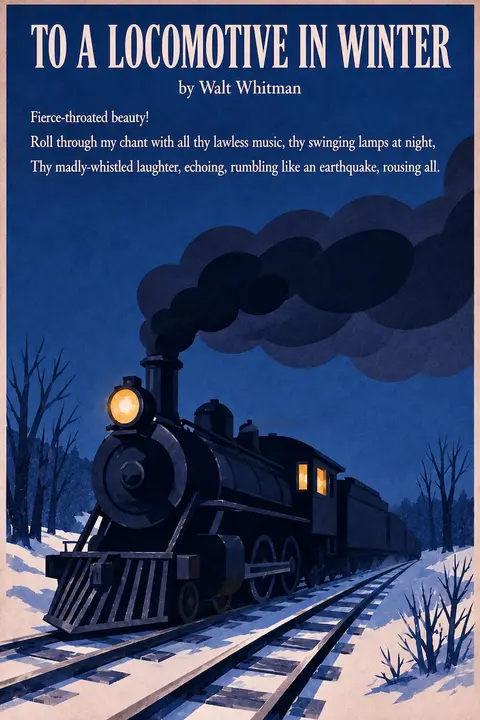
First published in 1876 in the New-York Daily Tribune before being incorporated into later editions of Leaves of Grass,"To a Locomotive in Winter" is a revolutionary ode to modern industrial energy by Walt Whitman (1819–1892). While many 19th-century poets viewed industrialization with skepticism or longing for a pastoral past, Whitman enthusiastically embraced technology as a vital expression of human achievement and American vitality. Fascinatingly, this piece is widely regarded as one of the first major poems in Western literature to treat a machine not as an unnatural intrusion, but as a legitimate subject of poetic beauty and awe. In this powerful excerpt, Whitman hails the steam engine as a fierce, living muse rolling through the cold winter landscape.
The Poem (Excerpt)
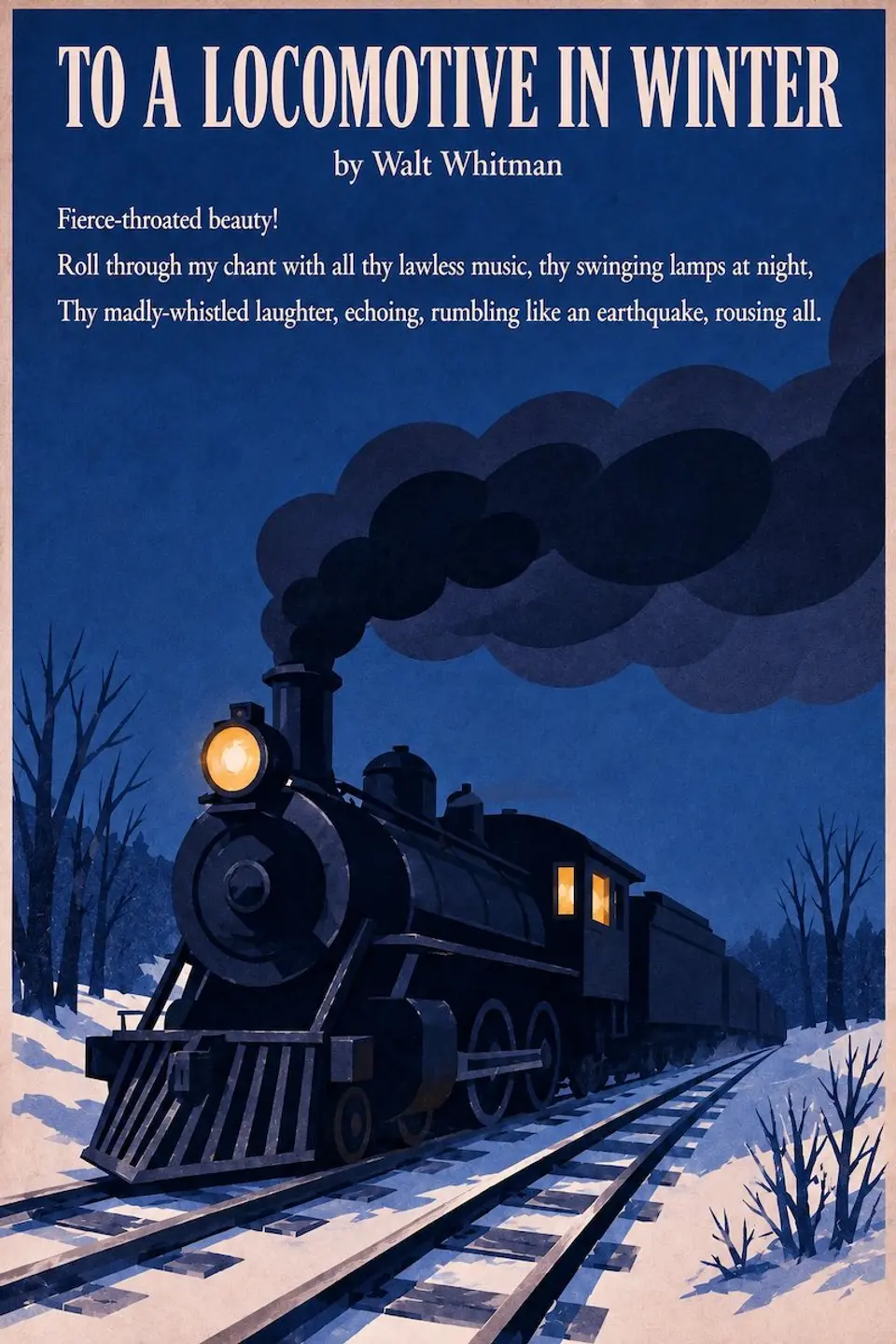
Fierce-throated beauty!
Roll through my chant with all thy lawless music, thy swinging lamps at night,
Thy madly-whistled laughter, echoing, rumbling like an earthquake, rousing all.
The Insight: Industrial Majesty
This kinetic excerpt offers a bold celebration of the raw power and music of progress. By addressing a speeding train as an inspiration rather than a disruption, Whitman shows how energy, movement, and modern innovation possess their own majestic form of beauty.
Whitman opens with an exuberant, personifying salute, calling the train a "Fierce-throated beauty!"
In the final lines, Whitman evokes the wild, nocturnal atmosphere of the railroad, celebrating its "lawless music," glowing lanterns, and ear-splitting whistle