Nov. 1, 2026

Untamed Passion: Elinor Wylie's "Madman's Song"

First published in 1921 in her acclaimed breakout collection Nets to Catch the Wind, "Madman's Song" is a hypnotic, musical exploration of wild obsession by Elinor Wylie (1885–1928). Wylie was a central figure in the 1920s New York literary scene, renowned as much for her dazzling, aristocratic beauty and bohemian lifestyle as for her razor-sharp, jewel-like verse. Encouraged by fellow writers like Edna St. Vincent Millay, Wylie crafted poems defined by meticulous craftsmanship, vivid natural symbolism, and a refusal to conform to conventional societal expectations. In "Madman's Song," she channels a haunting, mythical hunt to examine the cost, and ultimate glory, of pursuing an unreachable ideal.

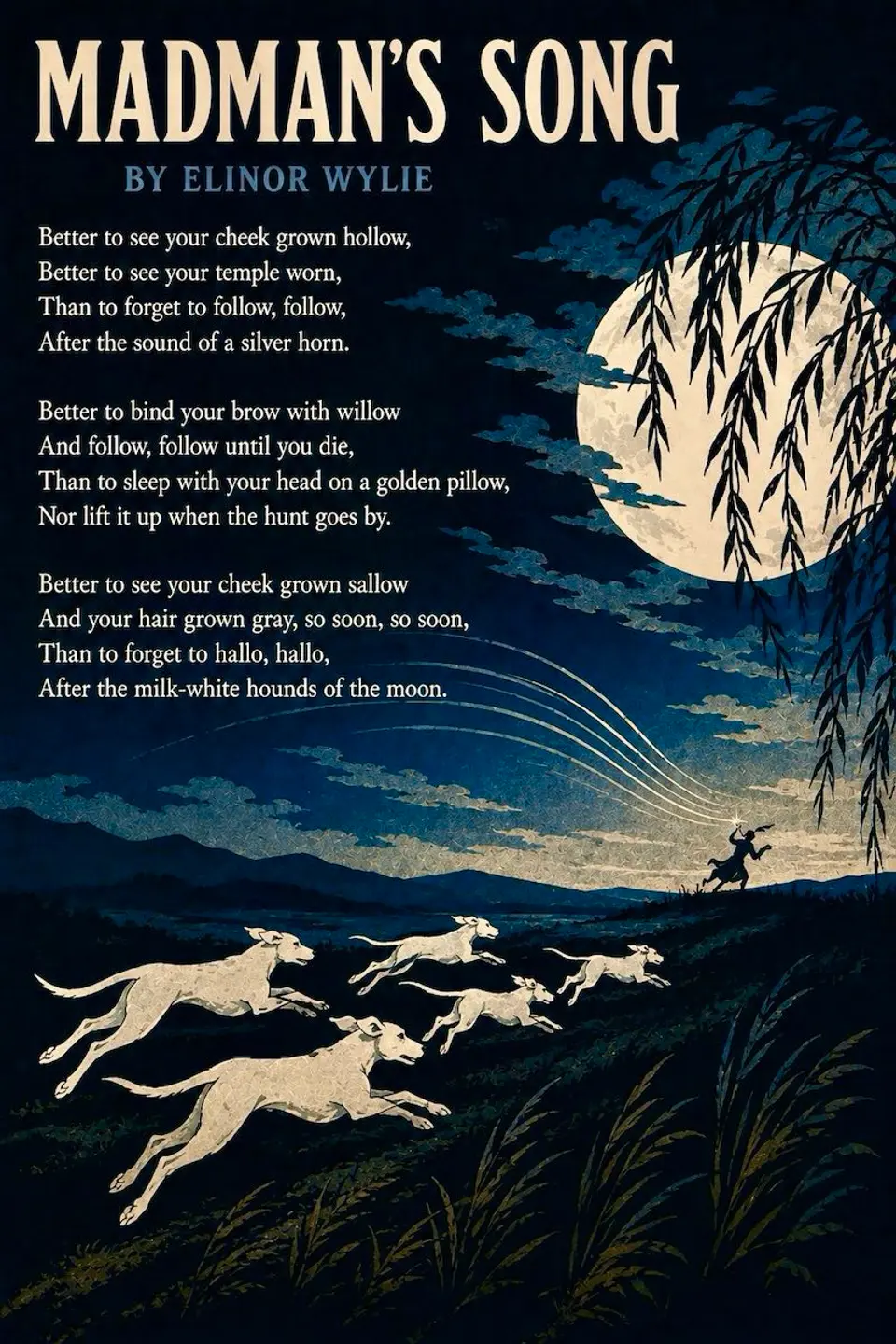
An illustration for the poem “Madman's Song” by Elinor Wylie showing white hounds running beneath a massive full moon while a figure blows a horn silhouetted on a hill under a dark night sky.

The Poem


Better to see your cheek grown hollow,
Better to see your temple worn,
Than to forget to follow, follow,
After the sound of a silver horn.

Better to bind your brow with willow
And follow, follow until you die,
Than to sleep with your head on a golden pillow,
Nor lift it up when the hunt goes by.

Better to see your cheek grow sallow
And your hair grown gray, so soon, so soon,
Than to forget to hallo, hallo,
After the milk-white hounds of the moon.


The Insight: Untamed Passion


This haunting poem offers a striking defense of choosing wild passion over comfortable complacency. By comparing a life of physical hardship to the spiritual death of ignoring one's true calling, Wylie suggests that pursuing a grand, mystical vision, no matter how consuming, is far better than settling for quiet conformity.

Wylie structures the poem around a relentless, driving rhythm, repeating "better to..." across three evocative stanzas. She sets up a stark contrast between physical decay—hollow cheeks, graying hair, and worn temples—and the tragic alternative of a comfortable, uninspired life sleeping on "a golden pillow".

Through vivid sensory images of a nocturnal chase, listening for "a silver horn" and calling out to "the milk-white hounds of the moon," the speaker frames true obsession as a noble, sacred hunt. Wylie reminds us that while chasing impossible dreams may wear down the body, giving up on the pursuit surrenders the soul itself.


Related Episode

58
Nov. 1, 2026

"Madman's Song" by Elinor Wylie

Better to see your cheek grown hollow, Better to see your temple worn, Than to forget to follow, follow, After the sound of a silver horn. Better to bind your brow with willow And follow, follow until you die, Than to sleep with your head on a golden pillow, Nor lift it up when the hunt goes by. Better to see your cheek grow sallow And your hair grown gray, so soon, so soon, Than to forget to hallo, hallo, After the milk-white hounds of the moon.