Nov. 8, 2026

Gentle Devotion: Charles G. Blanden's "A Song the Grass Sings"

First published in 1902 in his collection A Harvest of Verse, "A Song the Grass Sings" is an extraordinarily charming pastoral poem by Charles G. Blanden (1857–1933). Blanden was a prominent Midwestern poet, banker, and civic leader who served as mayor of Fort Dodge, Iowa, before moving to Chicago and San Diego to devote his life to literature. Known for his elegant verse and warm appreciation of the natural world, Blanden possessed a rare talent for quiet compression. This is a remarkable piece of verse, achieving more emotional resonance and narrative grace in twelve short lines than most poems accomplish in fifty. In this sweet, three-stanza song, Blanden personifies a single blade of grass finding its perfect companion in a field of wildflowers.

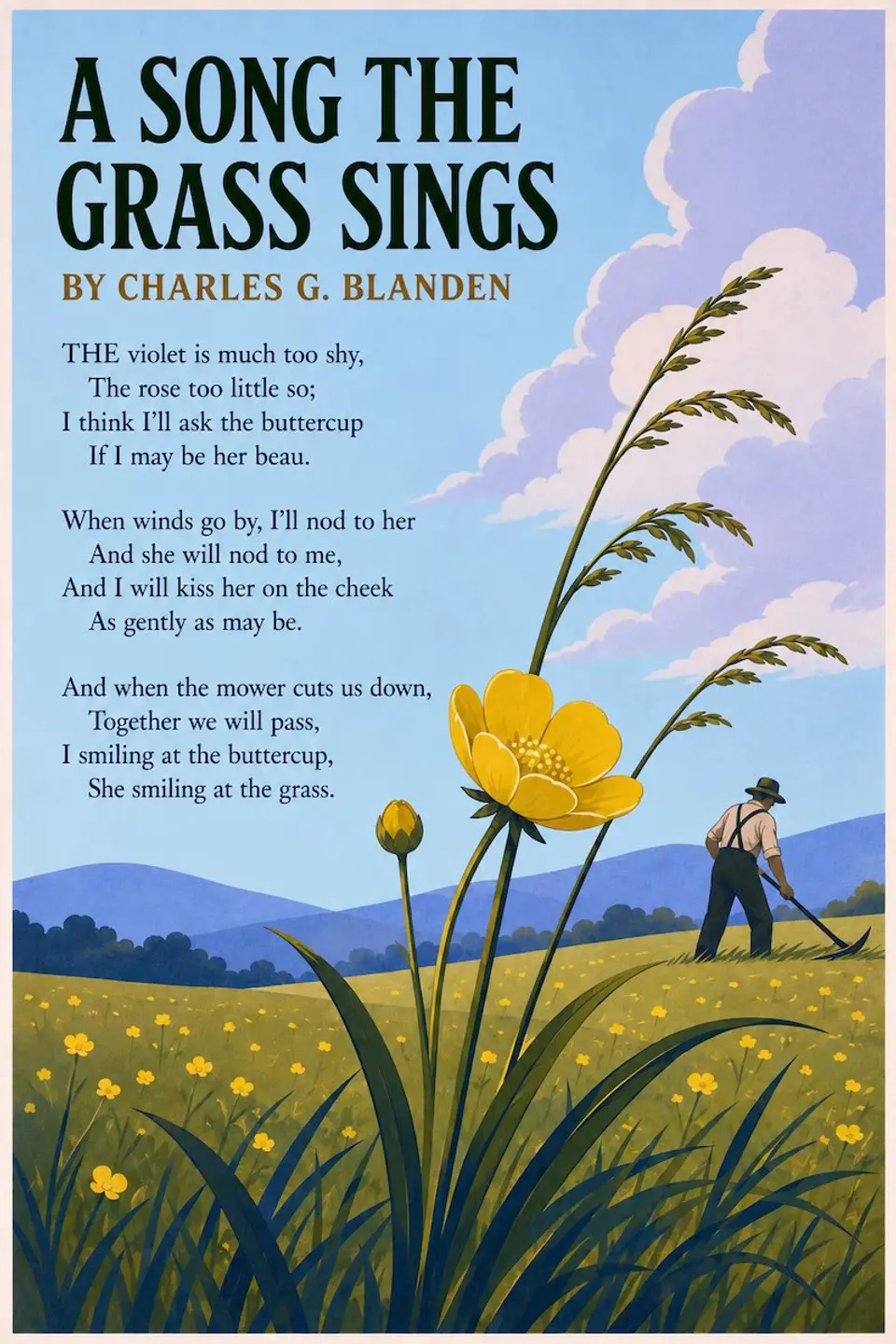
An illustration for the poem “A Song the Grass Sings” by Charles G. Blanden showing a yellow buttercup flower growing among blades of grass in a meadow with a farmer using a scythe in the background under a blue sky.

The Poem


THE violet is much too shy,
     The rose too little so;
I think I'll ask the buttercup
     If I may be her beau.

When winds go by, I'll nod to her
     And she will nod to me,
And I will kiss her on the cheek
     As gently as may be.

And when the mower cuts us down,
     Together we will pass,
I smiling at the buttercup,
     She smiling at the grass.


The Insight: Gentle Devotion


This tender poem offers a sweet reflection on the beauty of humble, quiet companionship. By framing love through the gentle interactions of meadow flora, Blanden shows how true devotion finds peace and contentment even in the face of life’s inevitable end.

Blanden opens with a playful assessment of suitors, rejecting the over-modest violet and the forward rose in favor of the buttercup. Personifying the grass as an affectionate suitor, the poem captures a lighthearted courtship built on simple, natural rhythm—nodding together in the passing wind and sharing a gentle kiss on the cheek.

In the final stanza, the poem shifts gracefully from light courtship to a poignant acceptance of mortality. As the distant mower approaches, the grass and the buttercup face their fate not with fear, but with shared joy and mutual affection. Blanden leaves us with a reassuring picture of devotion: two quiet lives facing the end together, smiling at one another to the very last moment.


▶️ Listen to the Poem

Related Episode

59
Nov. 8, 2026

"A Song the Grass Sings" by Charles G. Blanden

THE violet is much too shy, The rose too little so; I think I'll ask the buttercup If I may be her beau. When winds go by, I'll nod to her And she will nod to me, And I will kiss her on the cheek As gently as may be. And when the mower cuts us down, Together we will pass, I smiling at the buttercup, She smiling at the grass.