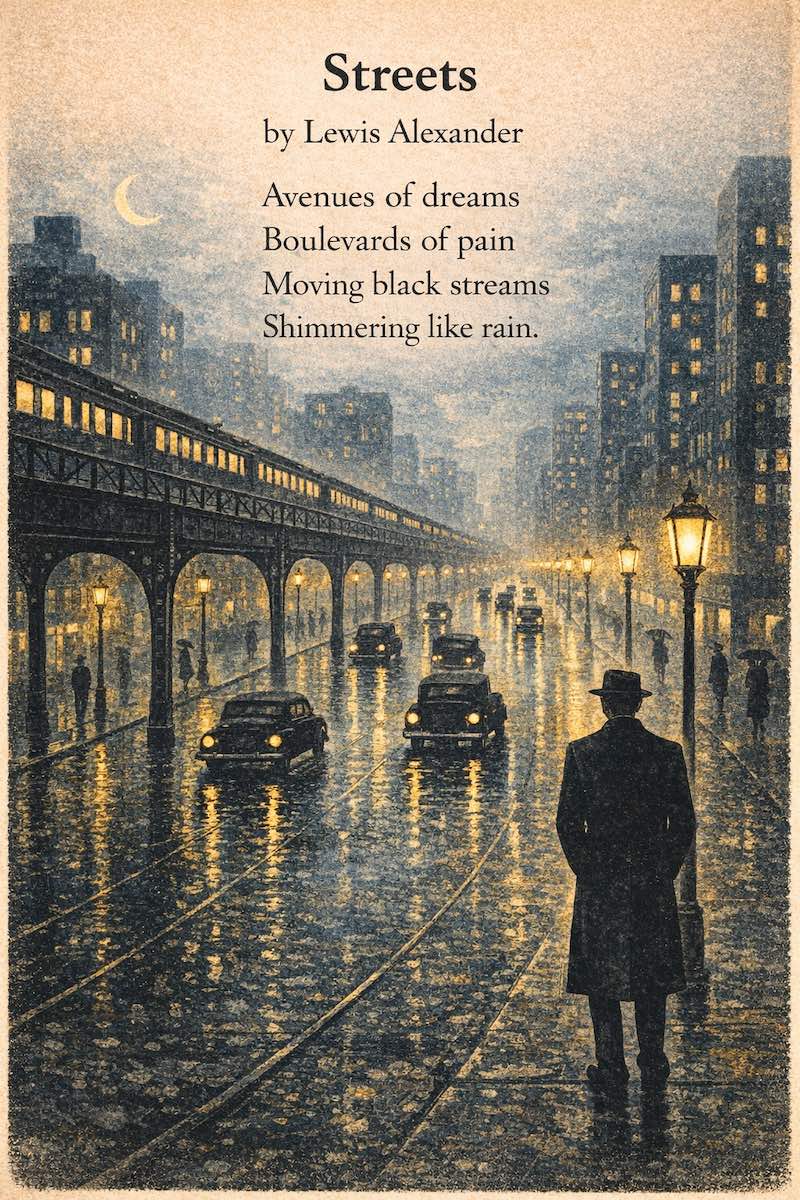
Shimmering Like Rain: Lewis Alexander's "Streets"
A key figure of the Harlem Renaissance, Lewis Alexander was celebrated for his ability to weave the energy of the urban environment into traditional poetic forms. First published in 1926, "Streets" is a masterful example of his minimalist style. Alexander often drew inspiration from Japanese haiku, a discipline that is evident in the sparse, striking imagery of this four-line work. By focusing on the rhythm of the city, he elevates the mundane asphalt to a place of profound emotional resonance.
The Poem
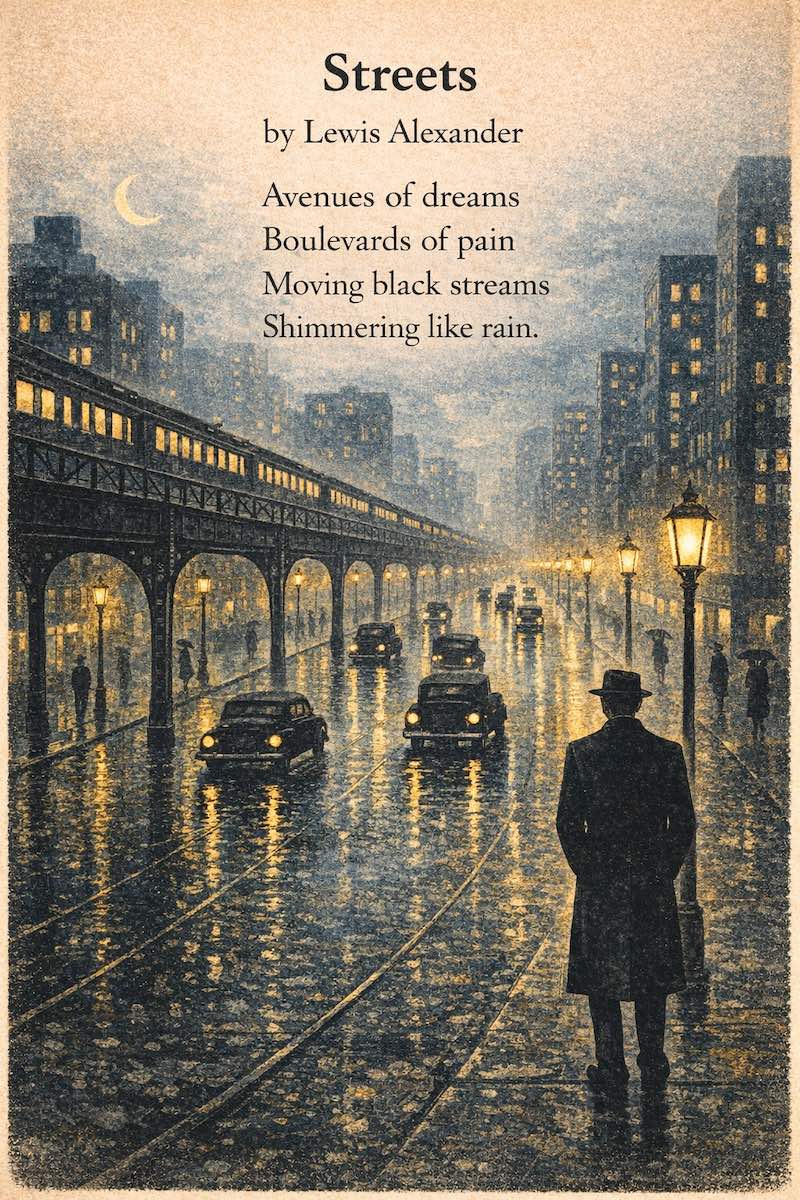
Avenues of dreams
Boulevards of pain
Moving black streams
Shimmering like rain.
The Insight: Shimmering Like Rain
The poem offers a clear, concise glimpse into the urban experience, where the physical structure of the city becomes a conduit for human emotion. By juxtaposing "dreams" with "pain," Alexander suggests that the streets we walk are not just geography, but a reflection of our internal lives.
Alexander utilizes a brilliant metaphor in the final lines, transforming crowded city traffic into "moving black streams." This fluid imagery suggests a sense of inevitable momentum—the city as a living, breathing entity that continues regardless of the individuals within it. The rhythmic progression from the expansive, hopeful "avenues" to the crowded, darker "streams" mimics the physical movement of walking through a bustling metropolis, capturing both its overwhelming scale and its intimate, human encounters.
The core philosophical "takeaway" lies in the word "shimmering." Despite the acknowledgment of pain, there is a persistent beauty in the struggle. Alexander reminds us that even in the darkest, most difficult "boulevards," there is a light—a shimmer—that keeps the dream alive. The city doesn't just hold our pain; it reflects our collective resilience and our capacity to keep moving through it.