A Critical Eye: Eugene Field's "Red" (Excerpt)
Published in 1892 in his collection Second Book of Verse, "Red" showcases a delightfully playful, opinionated side of Eugene Field. While famously dubbed the "Poet of Childhood" for his tender lullabies, Field was also a prolific journalist and humorist who loved to gently mock the overly refined, intellectual tastes of his era. By isolating the poem's spirited first stanza, we get a concentrated burst of his signature wit—an unapologetic, cheerful manifesto celebrating the most vibrant color in the spectrum.
The Poem (Excerpt)
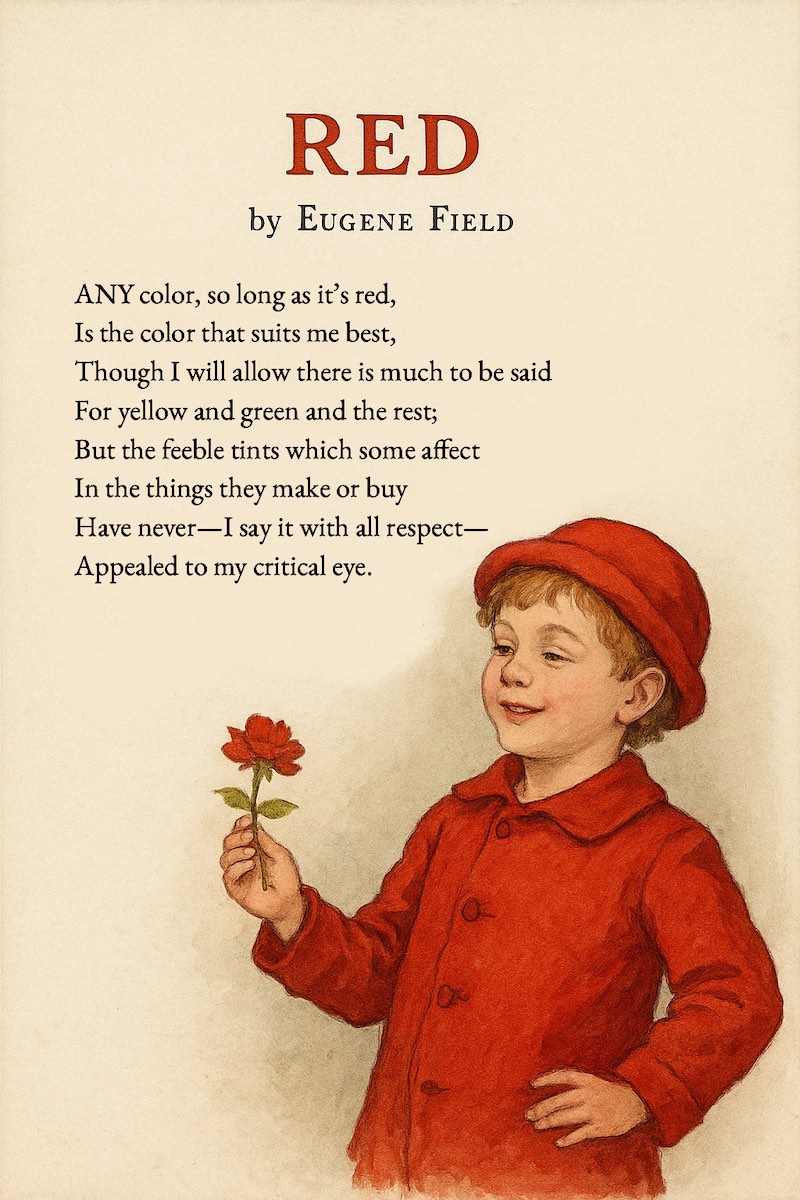
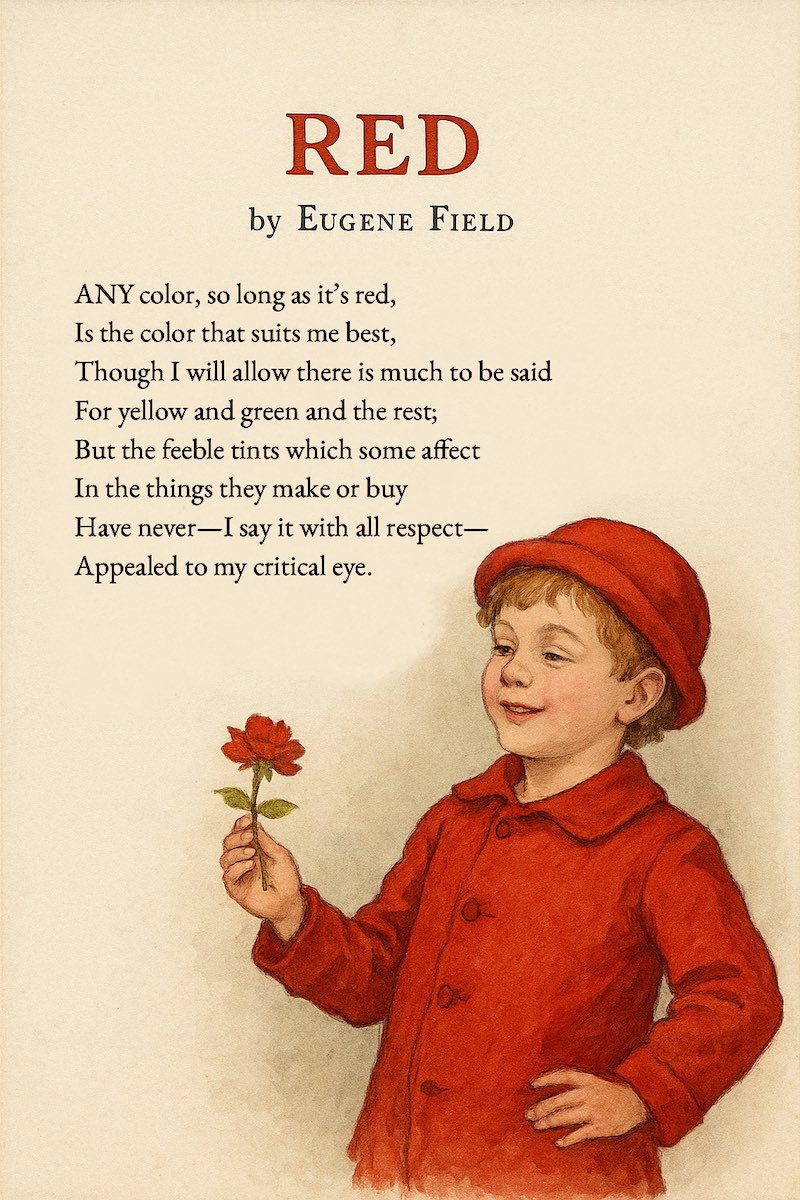
ANY color, so long as it’s red,
Is the color that suits me best,
Though I will allow there is much to be said
For yellow and green and the rest;
But the feeble tints which some affect
In the things they make or buy
Have never—I say it with all respect—
Appealed to my critical eye.
The Insight: A Critical Eye
This stanza offers a charming summary of unabashed preference and robust individualism. By soundly rejecting the "feeble tints" favored by high-society trendsetters, Field champions a straightforward, enthusiastic approach to aesthetics, reminding us that there is joy in loudly loving what we love without apology.
Field utilizes a conversational, rhythmic cadence that instantly builds a rapport with the reader. He sets up a brilliant comedic contrast between the absolute certainty of his opening line—"ANY color, so long as it’s red"—and the tongue-in-cheek politeness of his concessions to other shades. By dryly tossing in phrases like "I say it with all respect" and referencing his "critical eye," Field masterfully mimics the serious language of art critics, weaponizing it to defend a delightfully simple, primal preference.
The core philosophical "takeaway" is a quiet celebration of vitality over pretension. The "feeble tints" Field dismisses represent a broader societal tendency to dilute passion and energy in favor of polite, muted conformity. Choosing red is an intentional embrace of warmth, intensity, and life. It serves as a lighthearted but resonant reminder that our personal spaces, tastes, and identities are at their best when they are vivid, unmistakable, and thoroughly saturated with character.