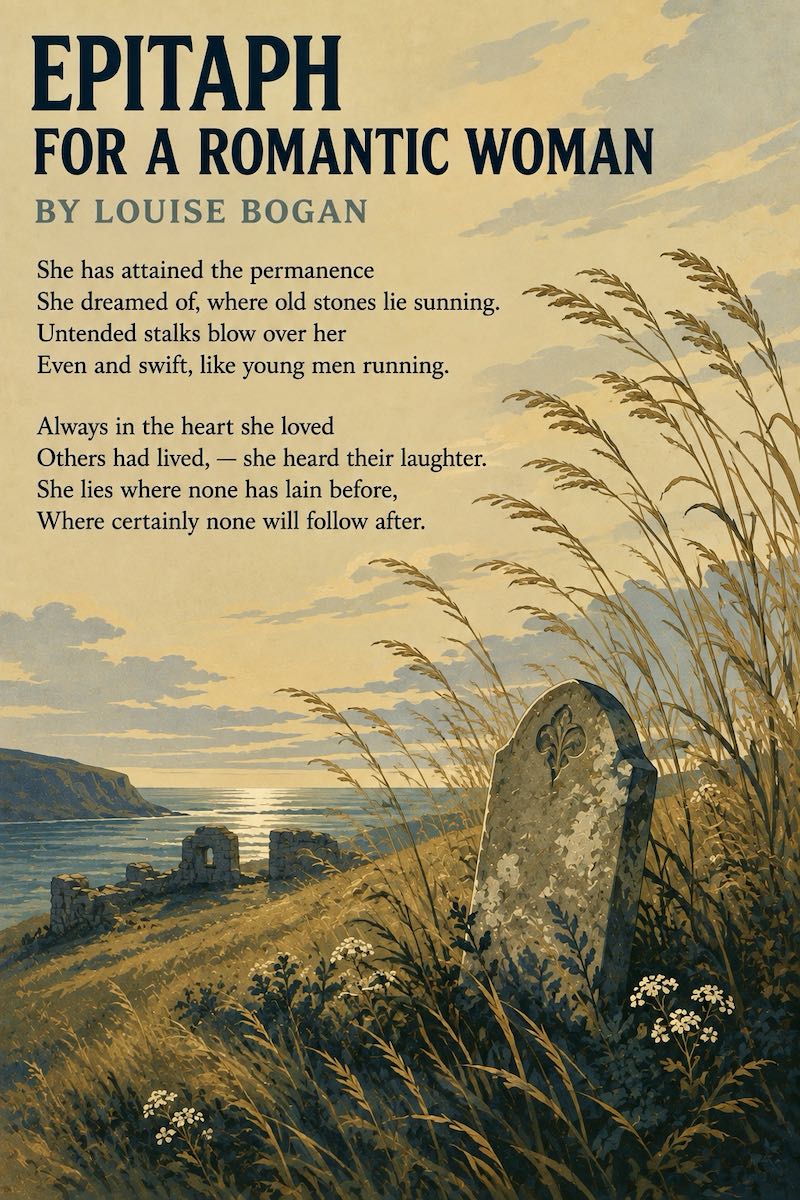
The Quiet Haven: Louise Bogan's "Epitaph for a Romantic Woman"
First published in 1923 in her celebrated debut collection Body of This Death, "Epitaph for a Romantic Woman" is a masterclass in irony and formal precision by Louise Bogan (1897–1970). Bogan was a titan of American letters who went on to serve as the fourth Poet Laureate of the United States (then known as the Consultant in Poetry to the Library of Congress). Famous for her sharp, unapologetic intellect, Bogan spent nearly 38 years as the influential poetry reviewer for The New Yorker, where her fierce standards shaped the American poetry landscape. In this sharp, eight-line portrait, she examines the painful illusion of ideal romance and the bittersweet peace that comes with finality.
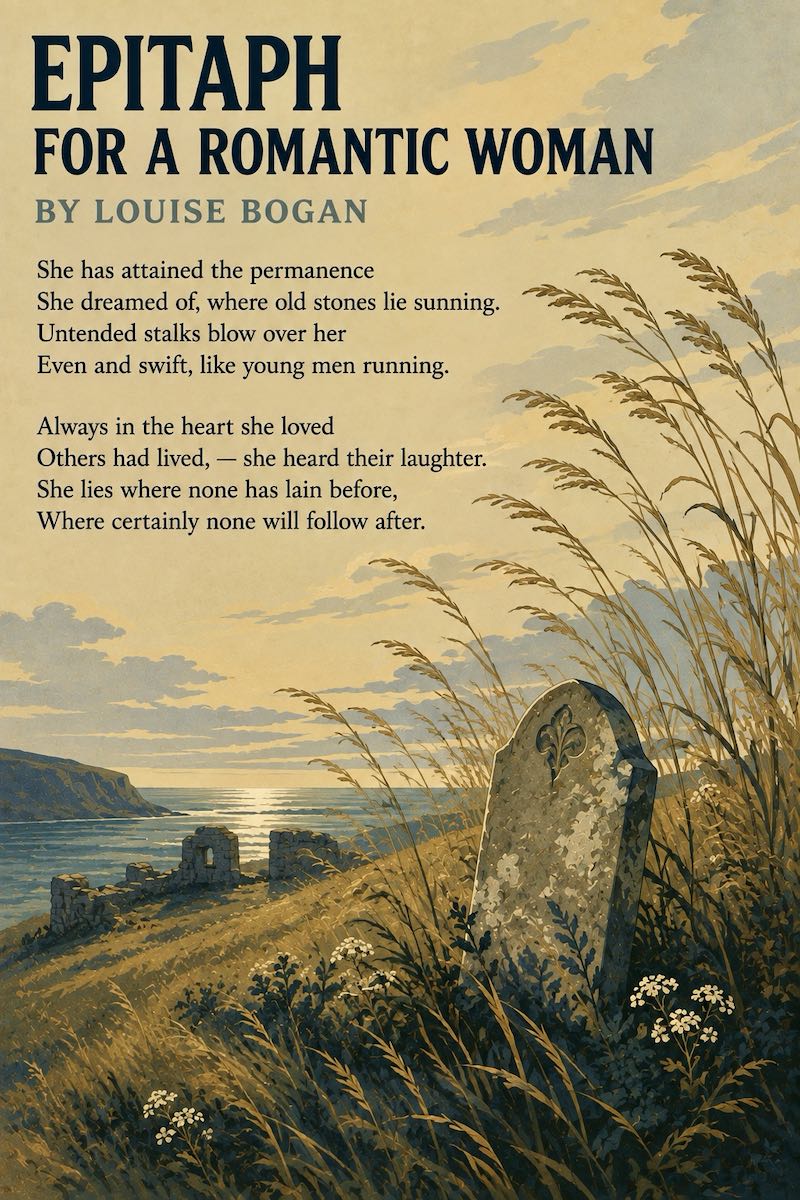
The Poem
Always in the heart she loved
The Insight: The Quiet Haven
This haunting piece offers a dry, unsentimental look at the tragic search for exclusive devotion. By contrasting a woman's lifelong romantic disappointment with the absolute solitude of her grave, Bogan shows how the ultimate escape from emotional rivalry can sometimes only be found in complete stillness.
Bogan sets the tone in the opening stanza with a clever layer of irony. The subject has finally achieved "permanence"—not in the enduring warmth of a lover's arms, but in a sunlit graveyard where "untended stalks" sway in the breeze. By comparing the moving grass to "young men running," Bogan subtly reminds us of the fleeting, elusive nature of youth and romance that the woman spent her life chasing.
The second stanza delivers the poem's sharpest emotional turn. During her life, the woman was plagued by jealousy and second-best status, constantly hearing the echo of "others" who inhabited her lover's heart. Death ultimately grants her the one thing love never could: a place that belongs uniquely to her, "where none has lain before, / Where certainly none will follow after."