Solitary Courage: William Carlos Williams's "El Hombre"
First published in 1917 in his third poetry collection, Al Que Quiere! ("To Him Who Wants It!"), "El Hombre" is a striking four-line study in quiet resilience by William Carlos Williams (1883–1963). Williams led an extraordinary double life: by day, he worked as a dedicated physician in Rutherford, New Jersey, delivering over 2,000 babies throughout his career. By night, he quietly reshaped 20th-century American verse—often scribbling lines on prescription pads and scraps of paper. He famously noted that medicine kept him grounded, giving him unfiltered access to real human life. His Spanish title—meaning "The Man"—was a deliberate nod to his Puerto Rican mother, Raquel. In this brief masterpiece, Williams draws a powerful line between individual purpose and the surrounding world.
The Poem
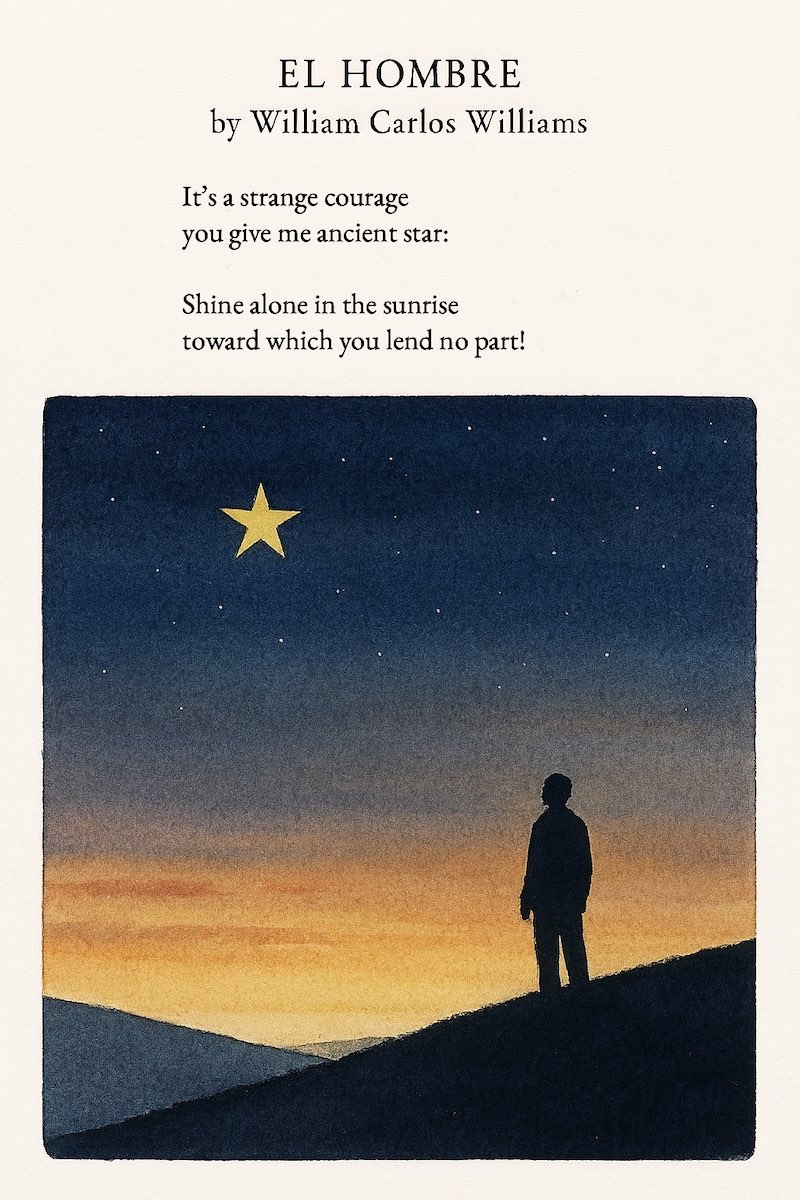
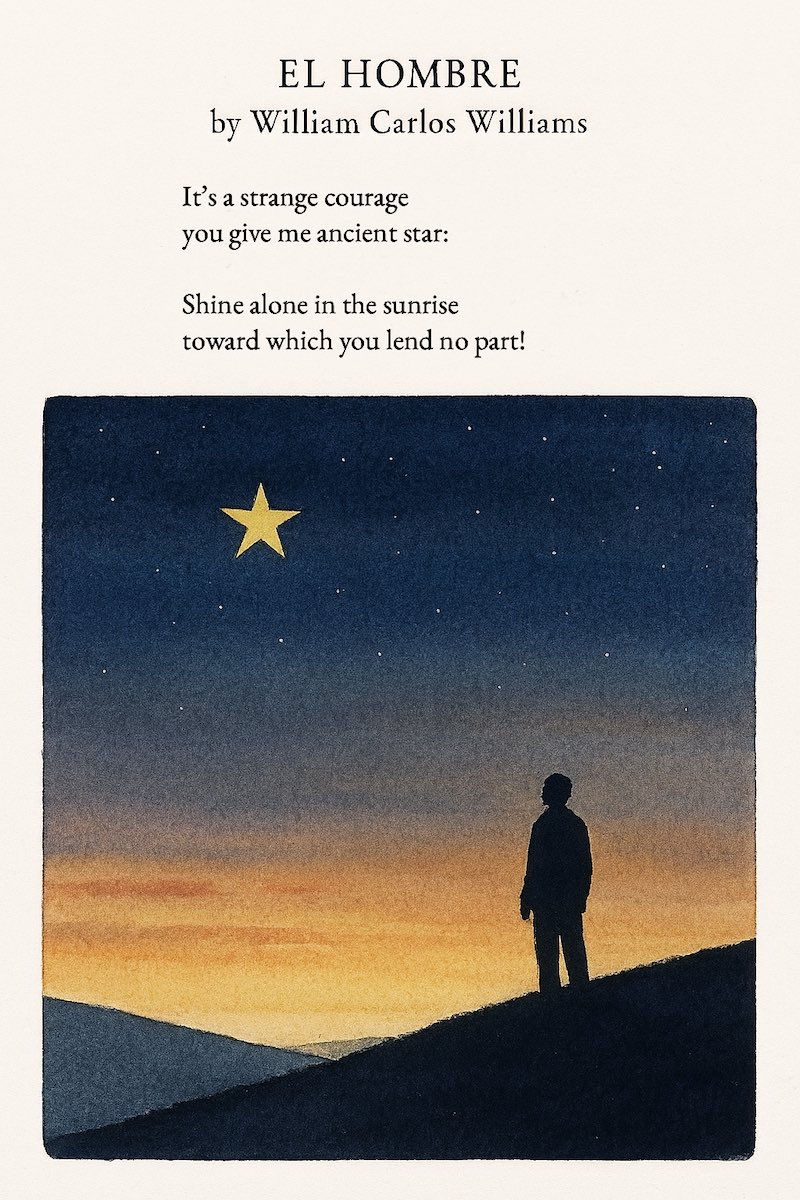
It’s a strange courage
you give me ancient star:
Shine alone in the sunrise
toward which you lend no part!
The Insight: Solitary Courage
This brief poem offers an inspiring look at the quiet strength of remaining true to oneself. By celebrating a lone star that continues to burn brightly even as the overwhelming dawn takes over, Williams shows how true dignity comes from standing firm in your own purpose, regardless of whether the world notices or aligns with you.
Williams opens by directly addressing an "ancient star," acknowledging a deep, unexpected sense of "strange courage" it inspires. Instead of viewing the morning sky as a welcomed arrival, the speaker highlights a stark contrast: the star shines completely alone against the rising sun, an overwhelming light "toward which you lend no part."
The core takeaway rests in the star's refusal to fade or blend in quietly. Rather than slinking away as the sunrise takes over the sky, the star holds its ground with quiet majesty. Williams reminds us that standing alone in our individual truth—even when surrounded by forces far larger than ourselves—is not a sign of weakness, but a profound form of personal independence.