The Absolute Stillness: Adelaide Crapsey's "Moon-Shadows"
First published posthumously in 1915, "Moon-Shadows" is a breathtakingly haunting work by Adelaide Crapsey. Best known for inventing the American cinquain—a condensed, five-line poetic form inspired by Japanese haiku—Crapsey (1878–1914) wrote much of her definitive verse while facing terminal illness in her early thirties. In this poem she explores the theme of mortality with immense restraint delivering an enduring truth about the quiet acceptance of death.
The Poem
Still as
On windless nights
The moon-cast shadows are,
So still will be my heart when I
Am dead.
The Insight: The Absolute Stillness
This short piece serves as a meditation on the peacefulness found in finality. By comparing her future state to the frozen geometry of nighttime shadows, Crapsey suggests that the end of life can be viewed not as a terrifying void, but as a space of pure, undisturbed tranquility.
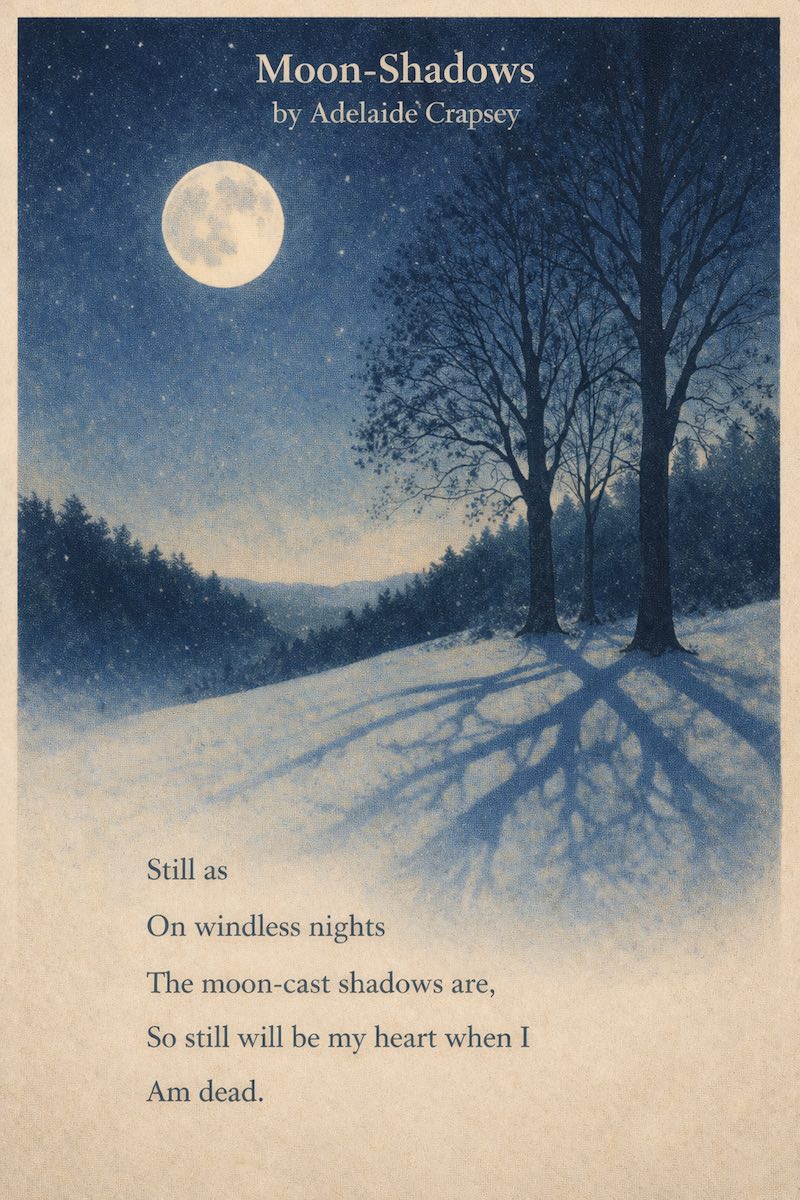
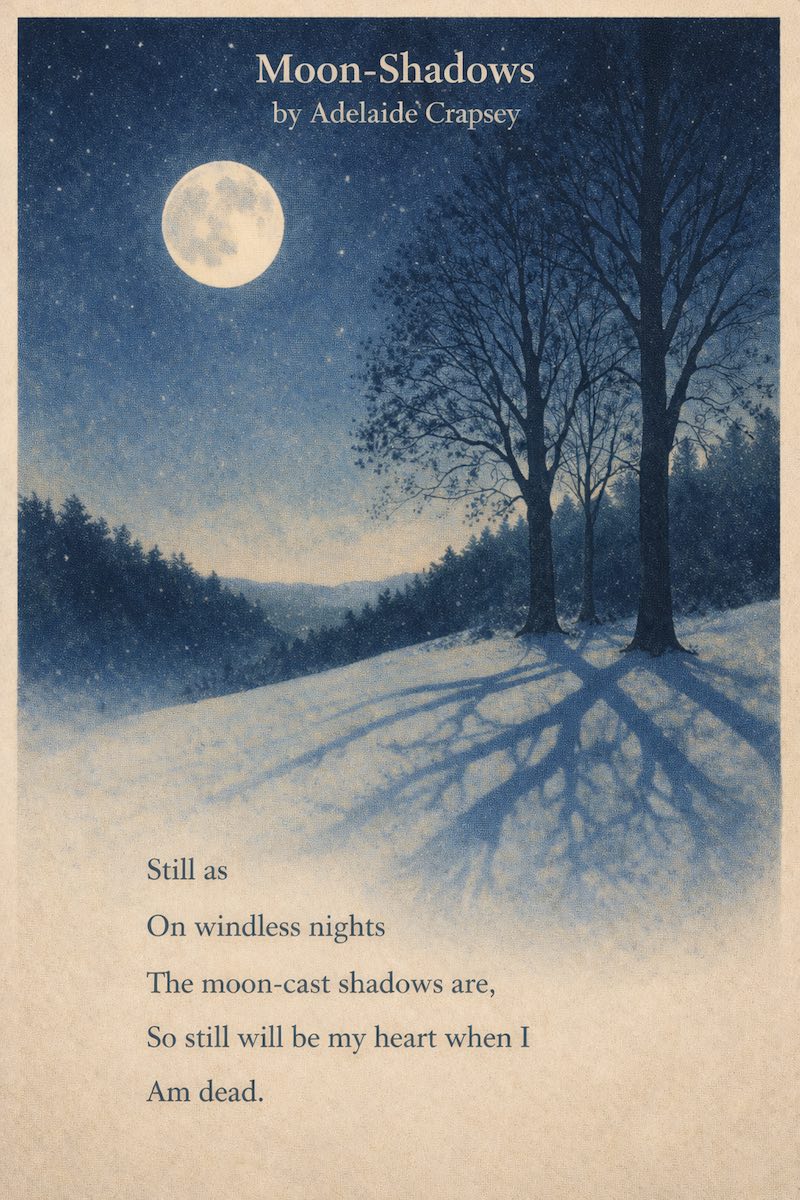
Crapsey uses a delicate build-up to establish the poem's initial feeling of complete silence, starting with the ultimate example of natural quiet: "Still as / On windless nights." The phrase "moon-cast shadows" is a brilliant choice of imagery because shadows made by moonlight are incredibly sharp. By focusing on the absolute stillness of these dark shapes across the landscape, her language slows the reading experience down, making the physical world feel breathless and completely unmoving.
The core philosophical "takeaway" relies entirely on the final turn where nature mirrors human mortality: "So still will be my heart when I / Am dead." There is no fighting back, panic, or grief in this statement. Instead, the final lines ground the heavy concept of a stopping heart in the serene, rhythmic design of the physical universe, transforming our ultimate departure into a gentle surrender to a vast, eternal calm.