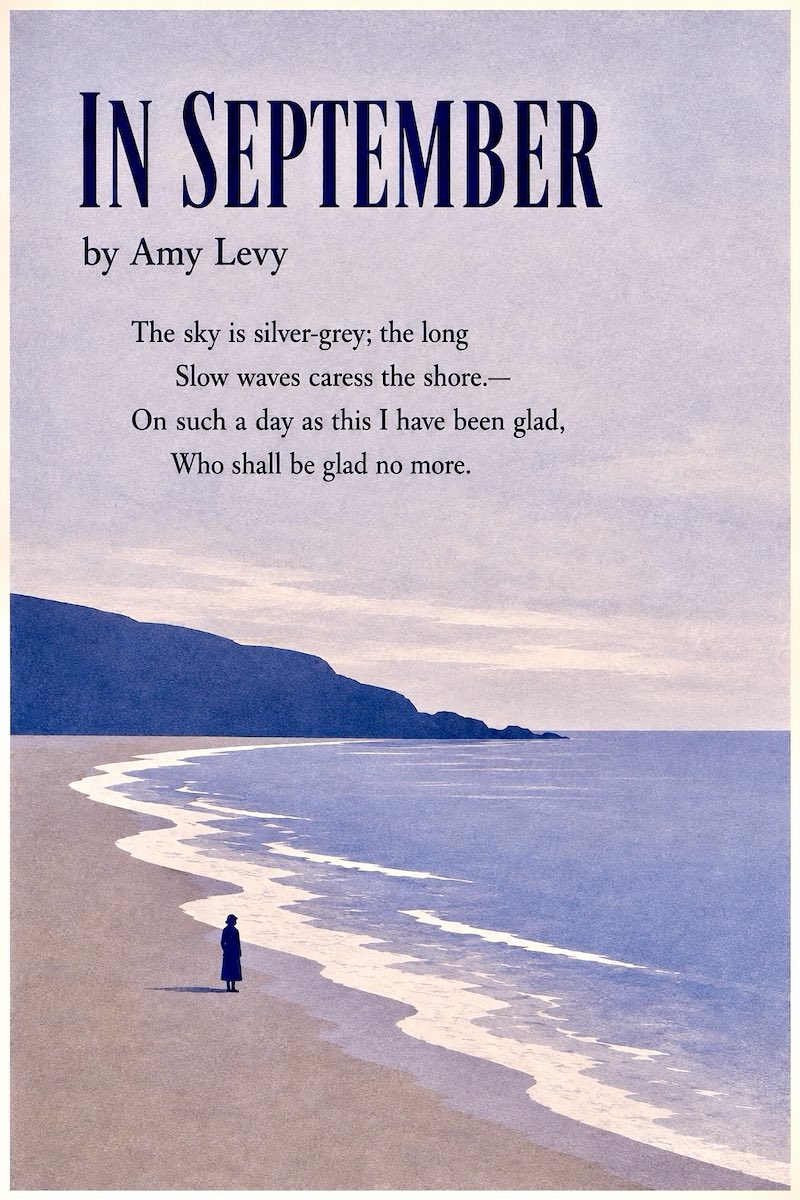
Autumn Melancholy: Amy Levy's "In September"
Published in 1889 in her acclaimed final collection A London Plane Tree and Other Verse, "In September" is a brief, poignant four-line meditation on memory and loss by Amy Levy (1861–1889). Levy was a trailblazing Victorian figure—she was the first Jewish woman to matriculate at Newnham College, Cambridge, and became a celebrated novelist, essayist, and poet admired by contemporaries like Oscar Wilde. Known for her sharp intelligence and candid exploration of modern city life and emotional solitude, Levy wrote with a striking economy of language. In this fleeting autumn stanza, she captures the quiet ache of comparing a serene present landscape with a lost personal happiness.
The Poem
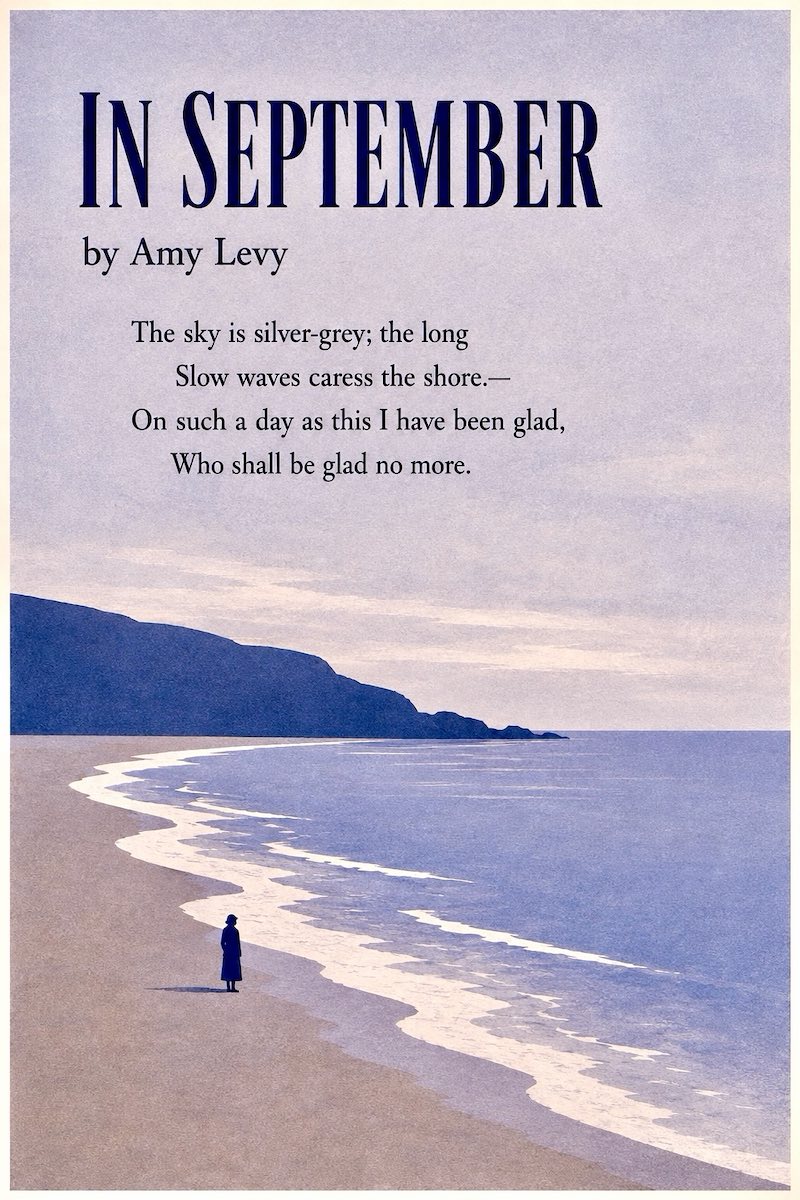
The sky is silver-grey; the long
Slow waves caress the shore.—
On such a day as this I have been glad,
Who shall be glad no more.
The Insight: Autumn Melancholy
This quiet, introspective poem offers a wonderfully brief meditation on the bittersweet nature of nostalgia. By contrasting a peaceful coastal scene with an inner sense of sorrow, Levy illustrates how a familiar atmosphere can suddenly awaken memories of past joy that can no longer be recaptured.
Levy opens with an evocative sensory description of the seascape, painting the sky in a muted "silver-grey" as "long / Slow waves caress the shore." The serene, rhythmic movement of the tide establishes a calm, almost soothing environment that feels peaceful on the surface.
In the final two lines, the poem turns sharply inward. The speaker recognizes that while the surrounding landscape remains unchanged—a day just like the ones where "I have been glad"—their internal world has fundamentally shifted. The stark conclusion, "Who shall be glad no more," highlights the heavy contrast between nature's quiet, continuous beauty and the inescapable weight of personal grief.