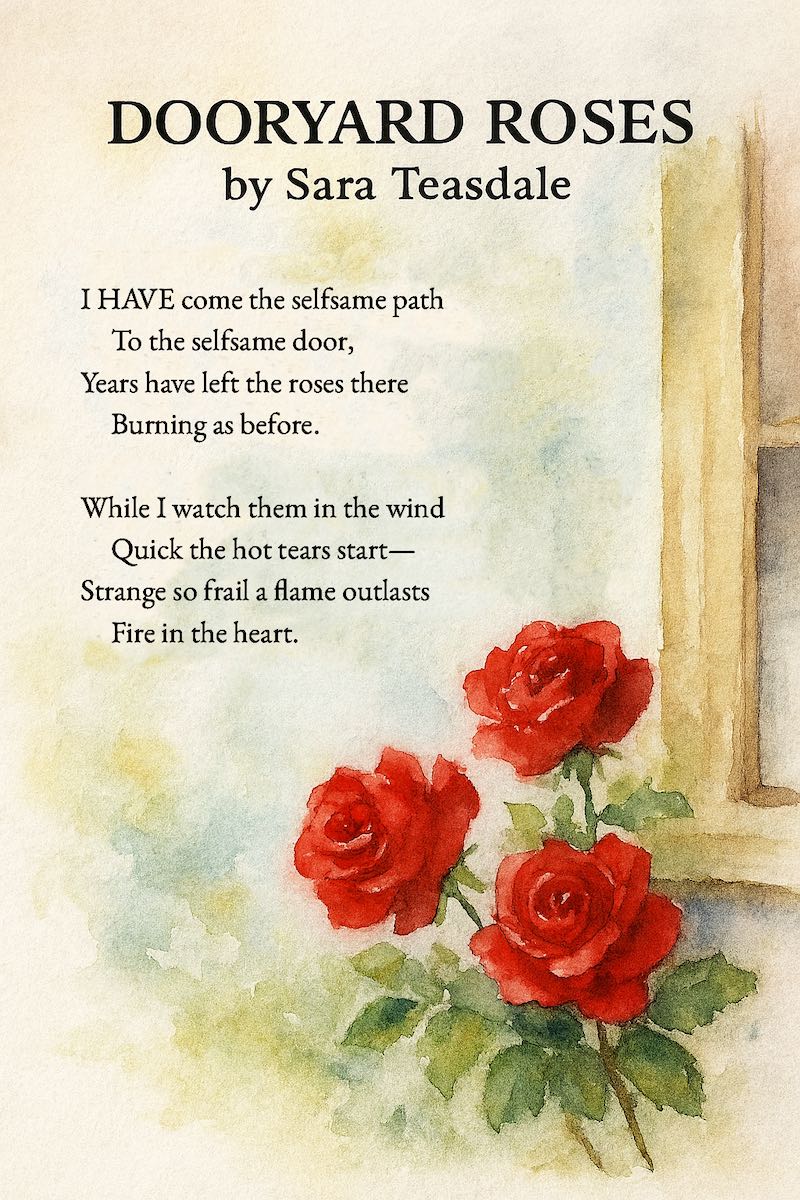
The Pain of Remembrance: Sara Teasdale's "Dooryard Roses"
First published in 1915 in her celebrated collection Rivers to the Sea, "Dooryard Roses" is a poignant work by Sara Teasdale. Writing during the American Lyric Golden Age, Teasdale (1884–1933) was renowned for her intensely personal, emotionally transparent poetry that transformed simple natural observations into deep reflections on love and grief. In this brief, tightly structured poem, Teasdale delivers an enduring truth about how memory can outlive the very feelings that birthed it.
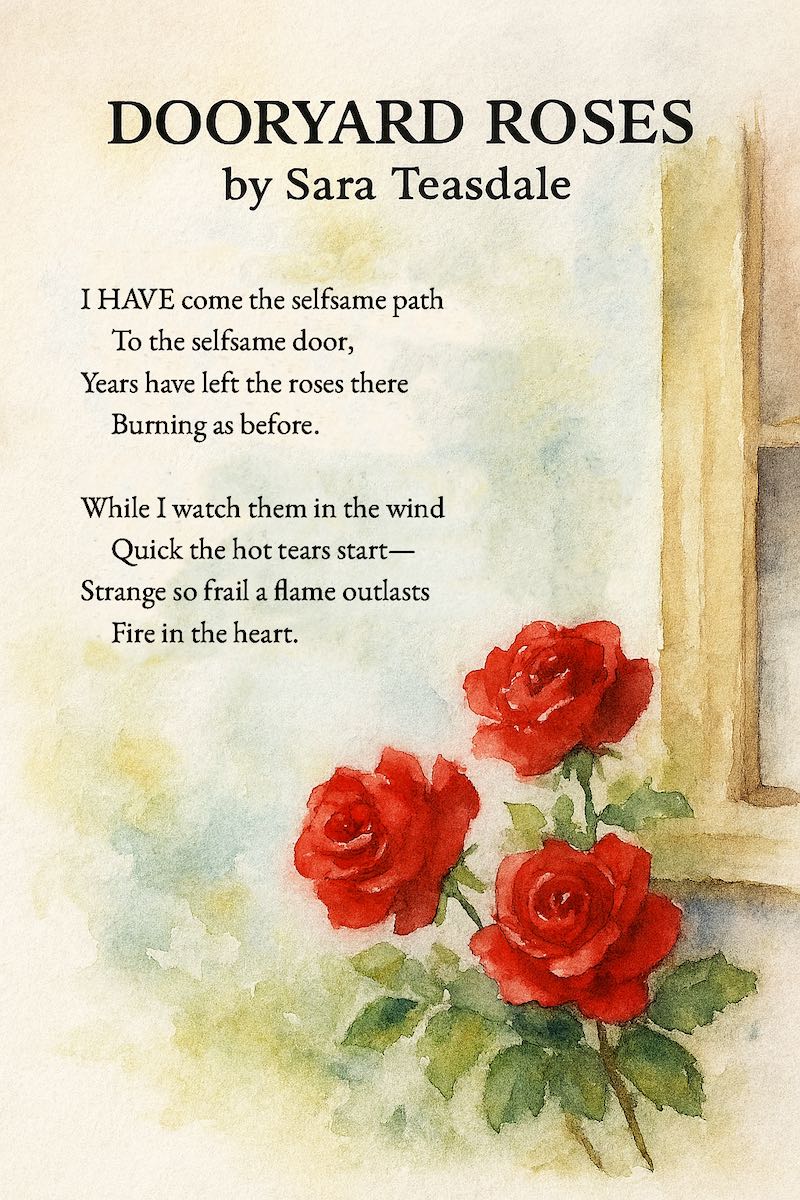
The Poem
To the selfsame door,
Years have left the roses there
Burning as before.
While I watch them in the wind
Quick the hot tears start—
Strange so frail a flame outlasts
Fire in the heart.
The Insight: The Pain of Remembrance
At its heart, the poem captures a perfect snapshot of how persistent and unyielding grief can be. By focusing on the continuous bloom of red roses in a familiar dooryard, Teasdale suggests that the physical world keeps the markers of our past emotional states long after our internal capacity to feel those passions has faded away.
Teasdale uses repetition and a steady, rhythmic meter to set up the poem's initial feeling of returning to a place of heavy emotional weight. The double use of "selfsame" slows down the pace of the opening lines, mimicking the deliberate steps of someone returning to a painful site of memory. By contrasting the unchanging, bright blooming of nature with the steady passage of years, she draws a clear line between the world's persistence and her own internal changes.
The core philosophical "takeaway" relies entirely on the final, devastating contrast between the natural world and the speaker's emotional state. In these concluding lines, Teasdale brilliantly matches the "frail flame" of the roses against the cold "wind"—and contrasts it with the fire that once burned in her own heart. The real message here is that nature holds up a mirror to our losses, showing us how physical elements in our environment can easily outlive the intense, seemingly immortal human passions we once thought would never die.