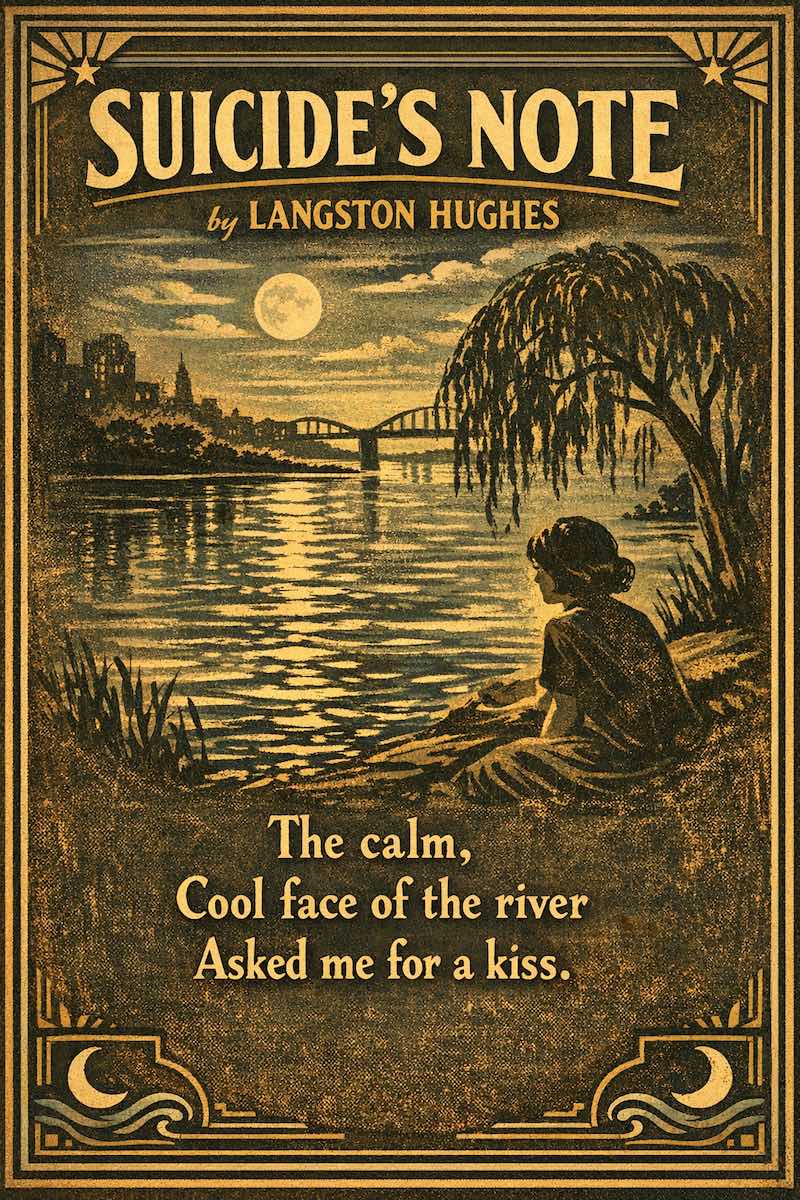
The Calm Face: Langston Hughes's "Suicide's Note"
First published in 1926 in his groundbreaking debut collection The Weary Blues, "Suicide's Note" is a brief, sharp work by Langston Hughes. As a central luminary of the Harlem Renaissance, Hughes was celebrated for capturing the raw emotional landscapes of urban life through vernacular rhythms and stark realism. In this ultra-minimalist three-line poem, Hughes explores the quiet, tragic allure of despair, delivering an enduring truth about human vulnerability.
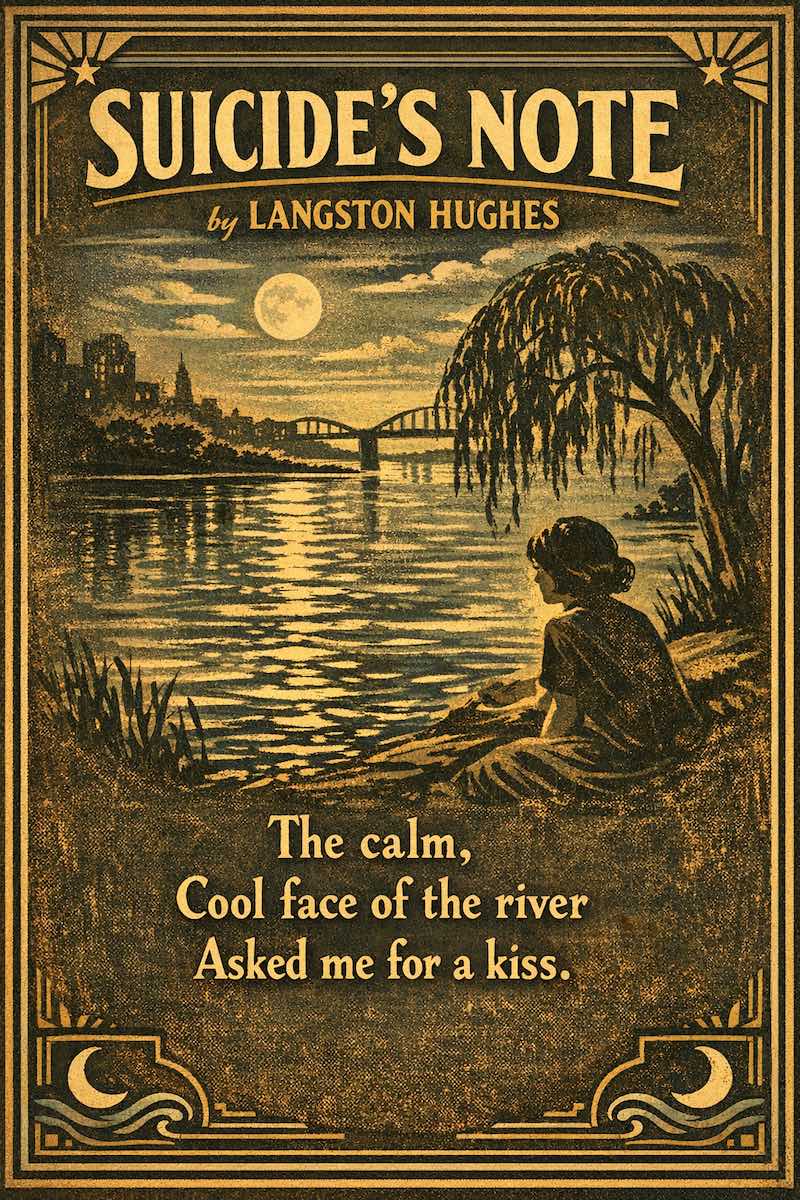
The Poem
The calm,
Cool face of the river
Asked me for a kiss.
The Insight: The Calm Face
This short poem gives us a look at the seductive nature of absolute peace. By focusing on a gentle, personified invitation from nature, Hughes suggests that the ultimate tragedy of despair often presents itself not as a violent storm, but as a quiet, welcoming sanctuary from pain.
Hughes utilizes an unexpected sensory inversion to establish the poem's initial premise, wrapping a tragic end in terms of intimacy and tenderness. Describing the water as a "calm, / Cool face" strips away the traditional terror associated with drowning, replacing it with an image of soothing relief. The deliberate line breaks stretch the brief sentence across three distinct movements, forcing a slow, quiet cadence that mimics the deceptive tranquility of a glassy river surface at night.
The core philosophical "takeaway" relies entirely on the final word: "kiss". By framing the act of self-destruction as a gentle, mutual embrace rather than a violent rupture, Hughes cuts straight to the psychological core of deep suffering. The poem reminds us that the true danger of profound loneliness or despair lies in its power to distort reality, transforming a fatal depth into a beautifully tragic promise of rest.