Divine Irony: Paul Laurence Dunbar's "Theology"
First published in 1896, "Theology" is a short, sharp work by Paul Laurence Dunbar. One of the first internationally recognized African-American poets, Dunbar (1872–1906) was celebrated for his mastery of traditional lyric forms alongside powerful explorations of social identity. In this brief, four-line poem, Dunbar strips away unnecessary ornamentation to deliver a clever, enduring truth about human nature.
The Poem
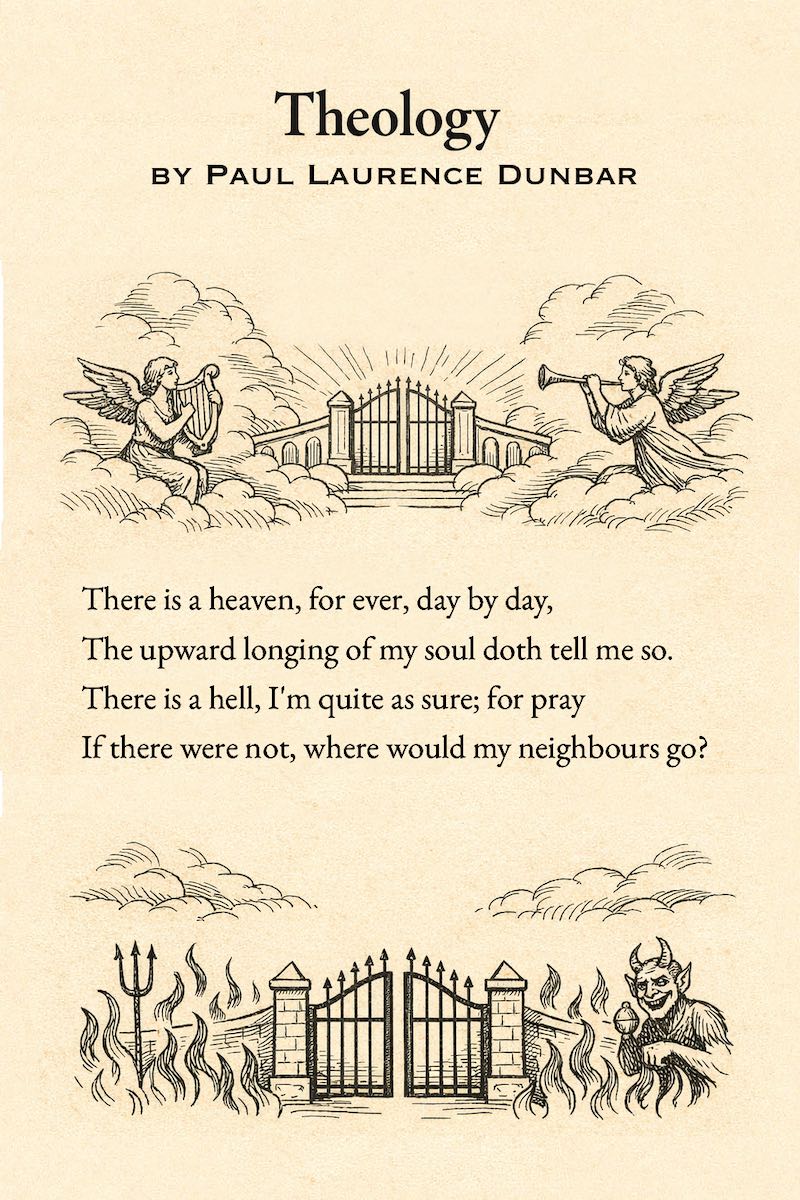
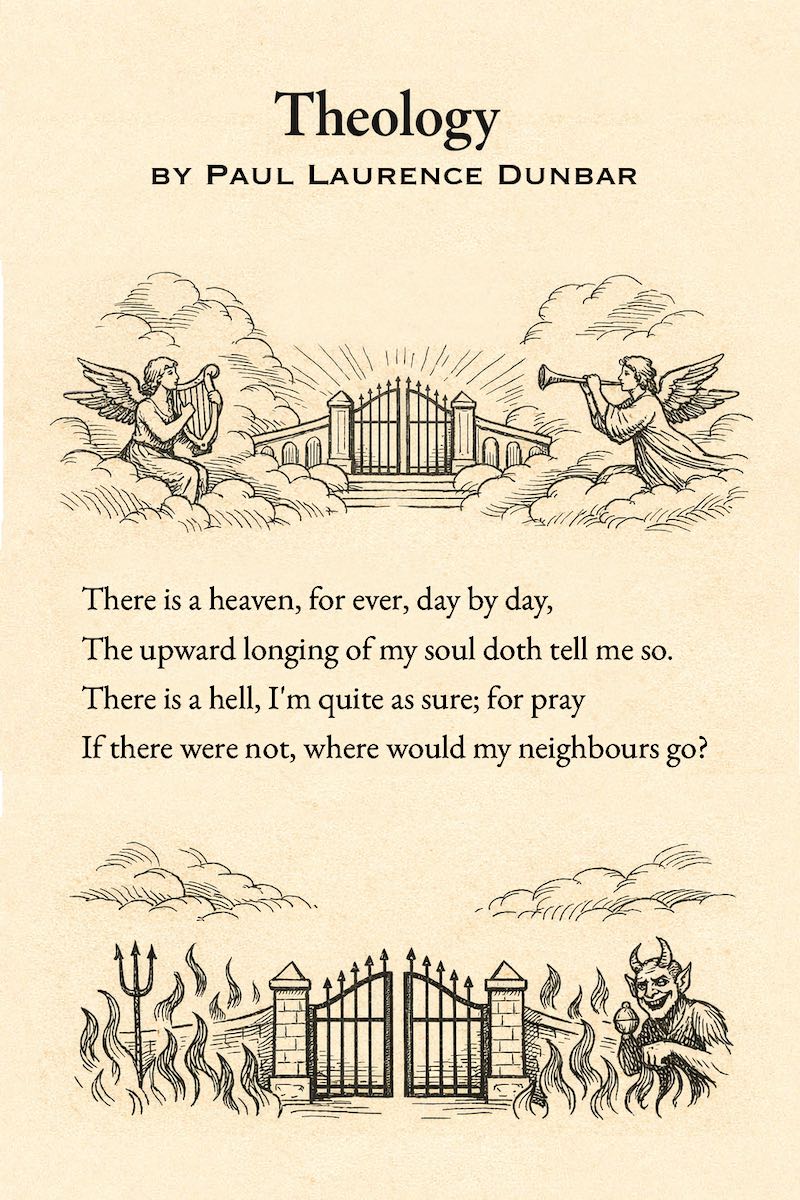
There is a heaven, for ever, day by day,
The upward longing of my soul doth tell me so.
There is a hell, I'm quite as sure; for pray
If there were not, where would my neighbours go?
The Insight: Divine Irony
The poem delivers a clear, concise glimpse into religious satire and human nature. By focusing on a single quatrain, Dunbar suggests that while personal faith provides divine comfort, people frequently look to spiritual structures to satisfy a deeply human, somewhat petty desire for social justice among their peers.
Dunbar uses a straightforward statement and a simple, alternating rhyme scheme to set up his initial point about spiritual certainty. The brief, four-line structure mirrors the quick, direct nature of the poem, creating a perfect pause that sets up his sharp comedic timing. His focus stays entirely on the bigger picture of how we look at right and wrong, leaving readers plenty of room to appreciate his clever wit.
The core philosophical "takeaway" relies entirely on the final question, which instantly flips the tone from a serious religious statement to a brilliant comedy punchline. Instead of tying the existence of hell to a terrifying spiritual dread, Dunbar ties it directly to a humorous social reality—the behavior and destination of his neighbors. The real message here is that our spiritual views are often shaped by the messy, everyday nature of human relationships, grounding an internal belief in the universal experience of finding humor in our shared flaws.