The Wit of the Wild: Hilaire Belloc’s "The Scorpion"
First published in 1897 as a standout piece in More Beasts for Worse Children, "The Scorpion" is a masterclass in Hilaire Belloc’s signature sardonic wit. This collection served as the popular follow-up to his earlier Bad Child’s Book of Beasts, which revolutionized light verse by satirizing the heavy-handed moralism often found in children's literature of the time. Belloc, an Anglo-French writer and historian, used these deceptively simple rhymes to deliver sharp, deadpan observations that continue to delight both children and adults over a century later.
The Poem
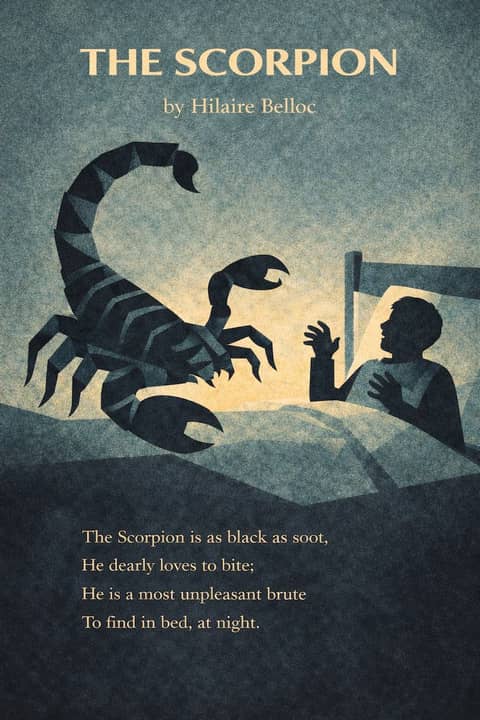
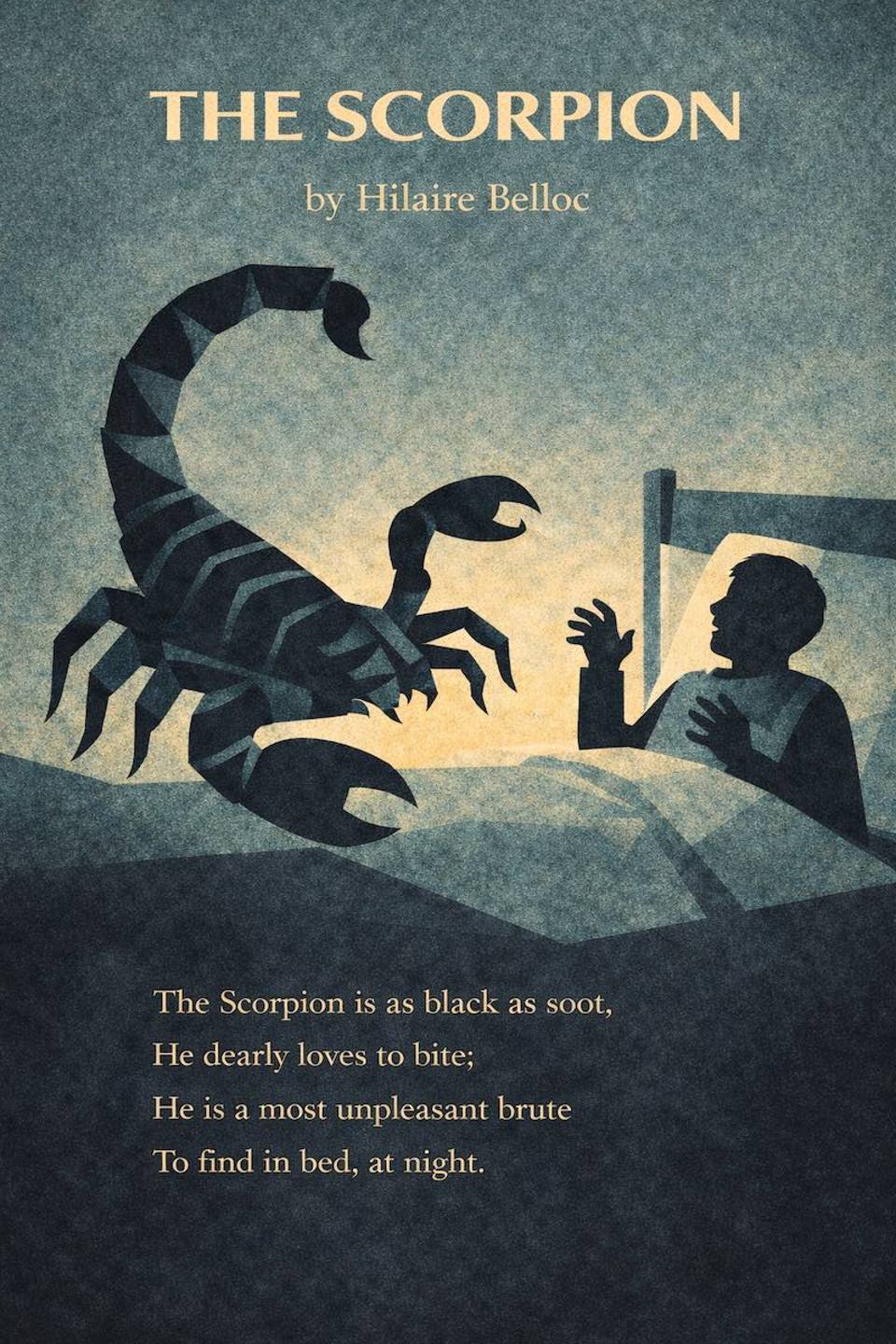
The Scorpion is as black as soot,
He dearly loves to bite;
He is a most unpleasant brute
To find in bed, at night.
The Insight: Nocturnal Dread vs. Comedic Detachment
The poem offers a humorous take on the absurdity of fear, transforming a terrifying nocturnal encounter into a brief, witty observation. By personifying the scorpion as an "unpleasant brute" with a "love" for biting, Belloc bridges the gap between a literal nightmare and a breach of good manners.
The core philosophical "takeaway" here is the power of comedic detachment. By stripping the creature of its biological menace and instead judging it through a lens of social "unpleasantness," Belloc suggests that even our most visceral fears can be tamed—or at least mocked—through the medium of light verse.
The irony lies in the simple, nursery-rhyme rhythm used to describe a scene of genuine fright, reminding us that sometimes the best response to the darker corners of the world is a well-placed joke. Truth, in Belloc's world, doesn't require a complex argument, just a refusal to let the "unpleasant" overwhelm the spirit.