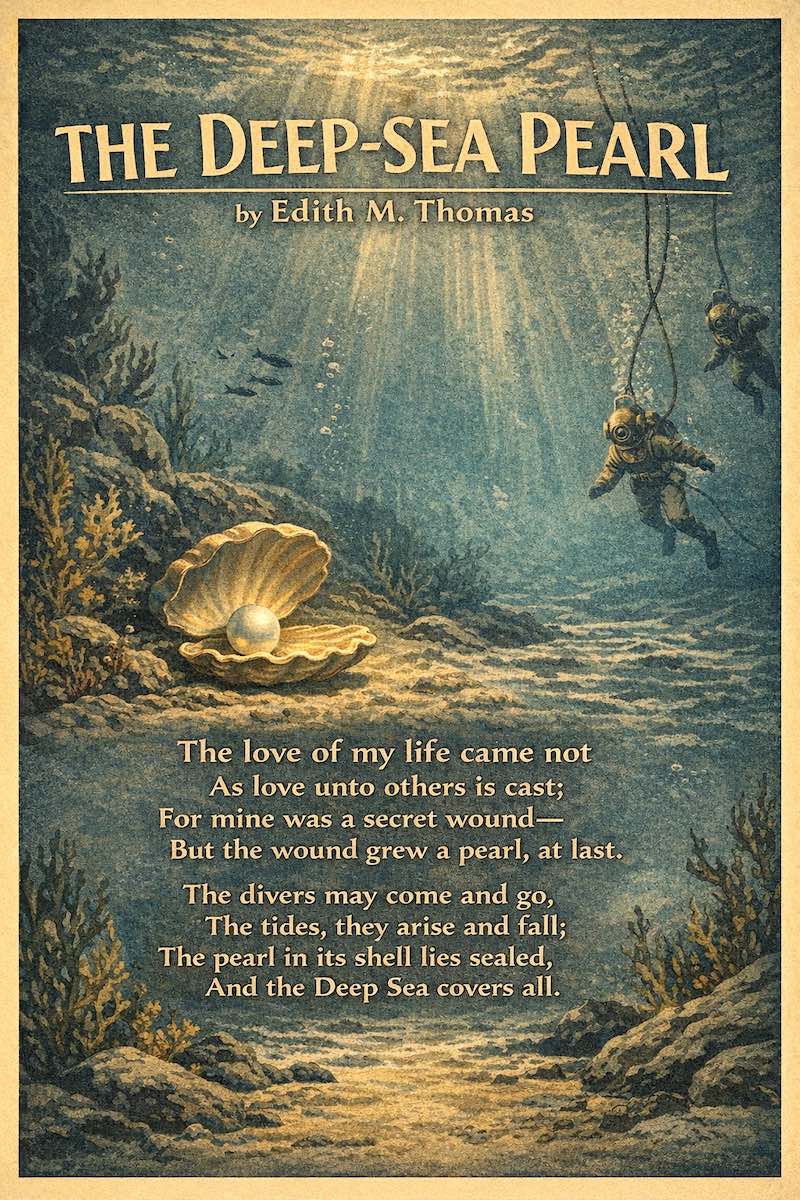
Hidden Sorrow: Edith M. Thomas's "The Deep-Sea Pearl"
First published in 1903 in her collection The Dancers, and Other Legends and Lyrics, "The Deep-Sea Pearl" is a poignant work by Edith M. Thomas. Born in Ohio, Thomas was a highly regarded American poet known for her classical restraint, intellectual depth, and mastery of traditional lyric forms. In this brief, tightly structured poem, Thomas delivers a powerful truth about emotional resilience and private grief.
The Poem
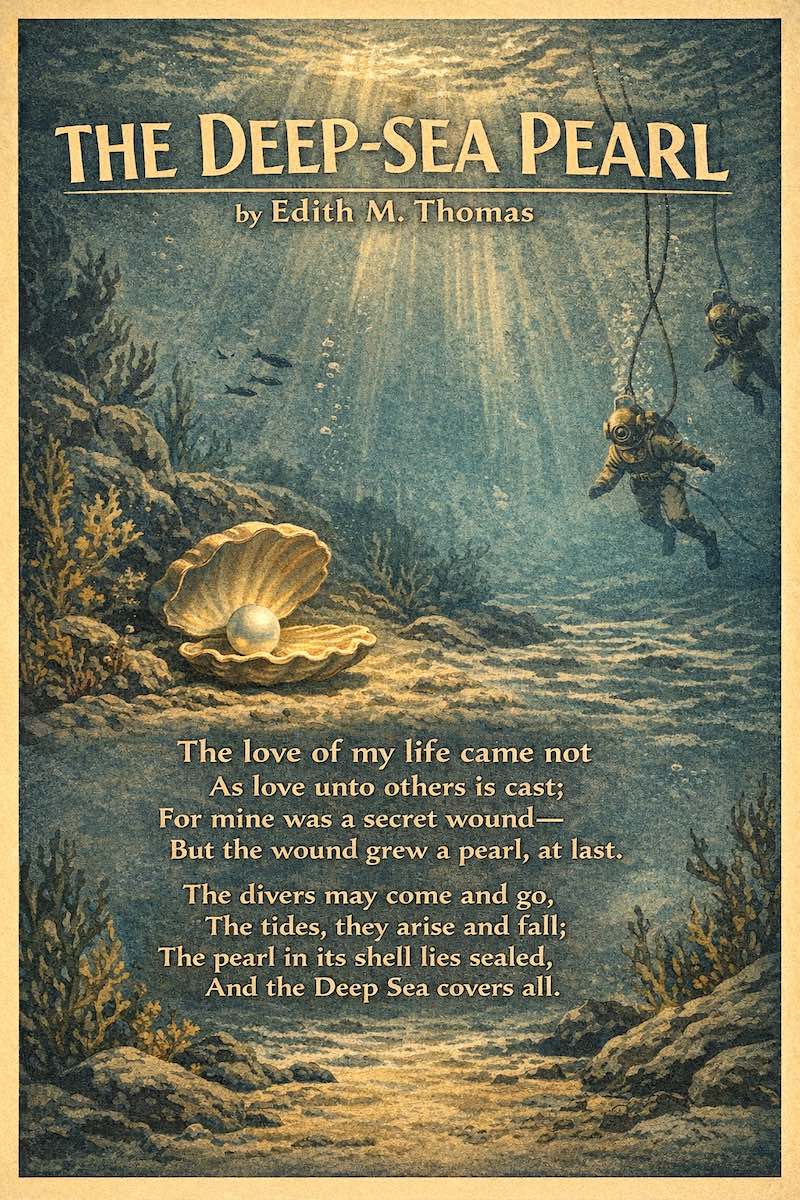
The divers may come and go,
The Insight: Hidden Sorrow
The poem delivers a clear, concise glimpse into the quiet power of hidden sorrow. By focusing on the hidden depths of the ocean, Thomas suggests that protecting one's private pain is not a sign of coldness, but a necessary process for turning personal grief into something of lasting, invaluable strength.
Thomas uses a brilliant extended metaphor to set up her initial point about guarding an emotional wound. The steady meter and simple rhyme scheme mirror the crushing, quiet isolation of the deep ocean floor. By using absolute language about keeping the pearl hidden, she draws a clear line between her interior world and the pressures of the outside environment.
The core philosophical "takeaway" relies entirely on the final stanza, which completely redefines the meaning of isolation. Instead of viewing a hidden hurt as something broken, Thomas elevates it into a beautiful jewel of personal autonomy. The real message here is that true emotional healing happens entirely on our own terms, grounding a painful internal experience in the quiet dignity of a protective boundary.