A Critical Eye: Eugene Field's "Red" (Excerpt)
A prolific poet and humorist in the late 19th century, Eugene Field was affectionately known as the "Poet of Childhood." First published in his 1892 collection A Second Book of Verse, "Red" is a multi-stanza work that is often distilled down to this opening eight-line stanza. In this format, the poem is transformed from a longer meditation into a sharp, concise statement of personal preference. Field was a key figure in the "Gilded Age" of American literature, where his lighthearted style provided a playful counterbalance to more solemn Victorian sensibilities.
The Poem
ANY color, so long as it’s red,
Is the color that suits me best,
Though I will allow there is much to be said
For yellow and green and the rest;
But the feeble tints which some affect
In the things they make or buy
Have never—I say it with all respect—
Appealed to my critical eye.
The Insight: A Critical Eye
The stanza offers a charming summary of how strongly our subjective preferences can shape our perception of the world. By contrasting the "ANY color" simplicity of red with the "feeble tints" favored by others, Field highlights the delight we take in having a definitive, personal perspective.
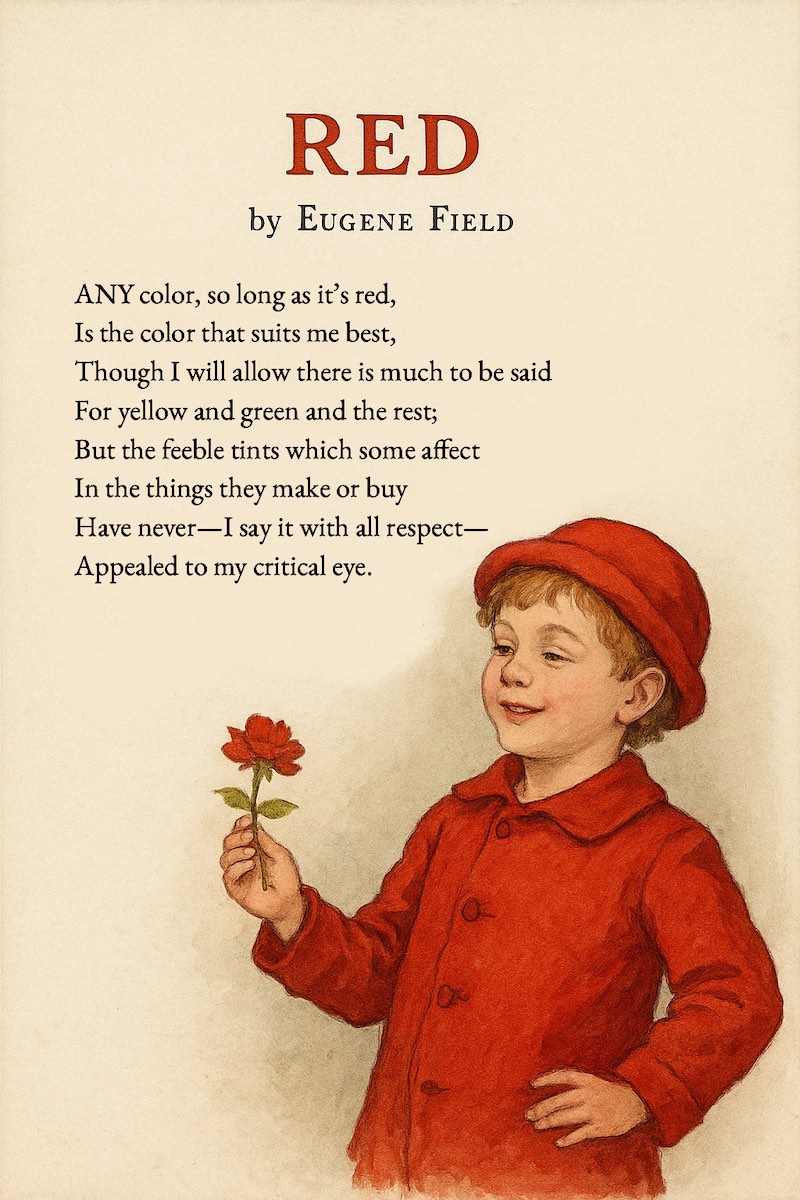
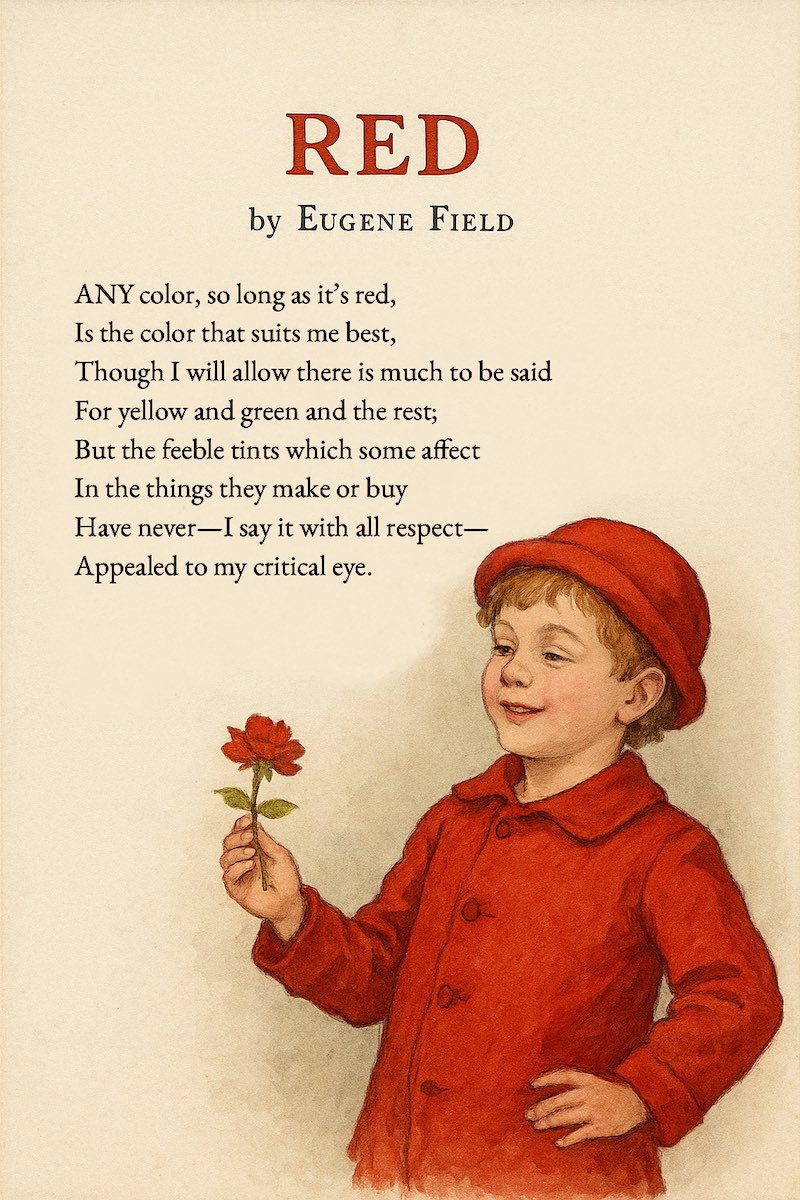
Field employs a rhythmic and straightforward rhyme scheme to mirror the decisiveness of his own "critical eye". The illustration perfectly matches this tone, showing a young child—or perhaps a stylized inner voice—holding a definitive red rose and observing the world with a knowing, self-assured expression. The joke lies in the immense conviction that a child (or an adult) holds regarding their subjective aesthetic choices, a conviction so total it dismisses all other possibilities as "feeble".
The core philosophical "takeaway" is that true individuality often begins with our simplest declarations. Yeats encouraged us to value the complexity of the spirit, but Field reminds us that the simple joy of having our own specific, unshakeable taste is a form of truth in its own right—a refusal to let our "critical eye" be overwhelmed by the "rest".