Love Across the Divide: A. E. Housman’s "The Half-Moon Westers Low, My Love"
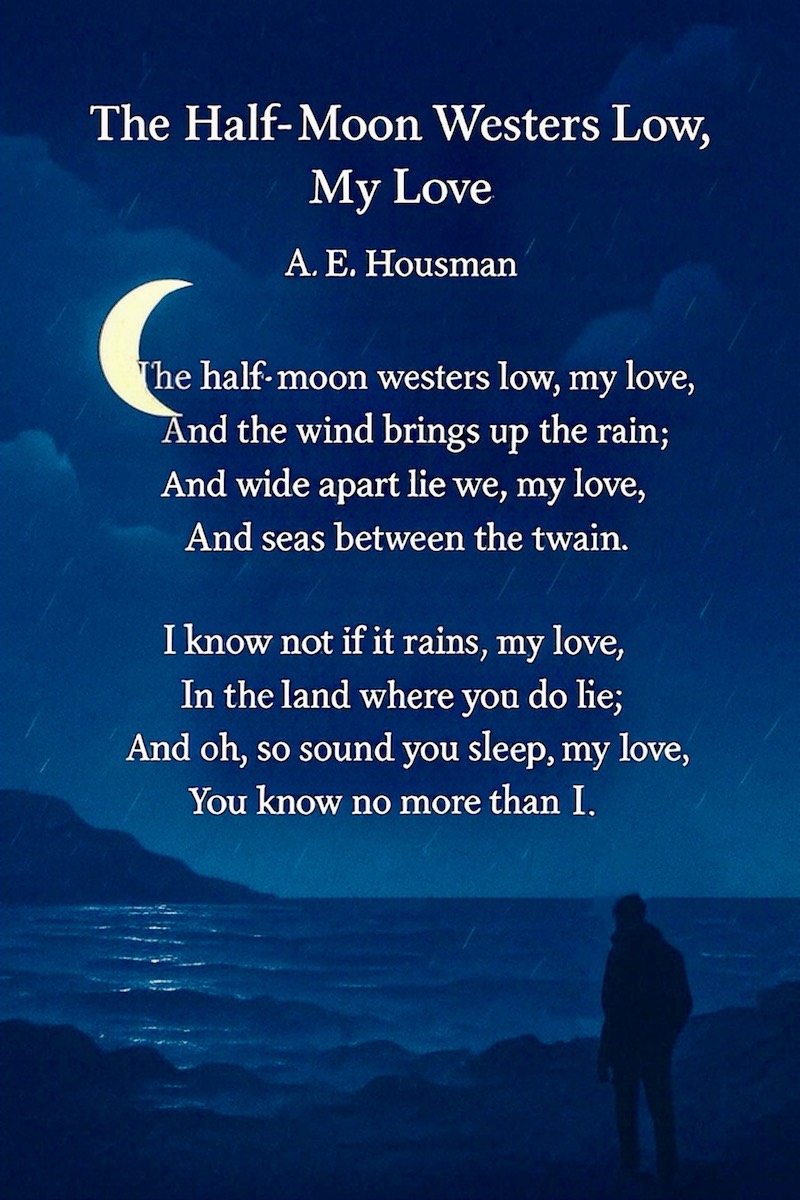
Best known for his cycle A Shropshire Lad, A. E. Housman was a master of capturing profound grief and longing with deceptive simplicity. "The Half-Moon Westers Low, My Love" was published in his 1922 collection, Last Poems. It serves as a haunting exploration of the distance—both physical and metaphysical—that separates the living from the dead, set against a backdrop of a darkening, indifferent sea.
The Poem
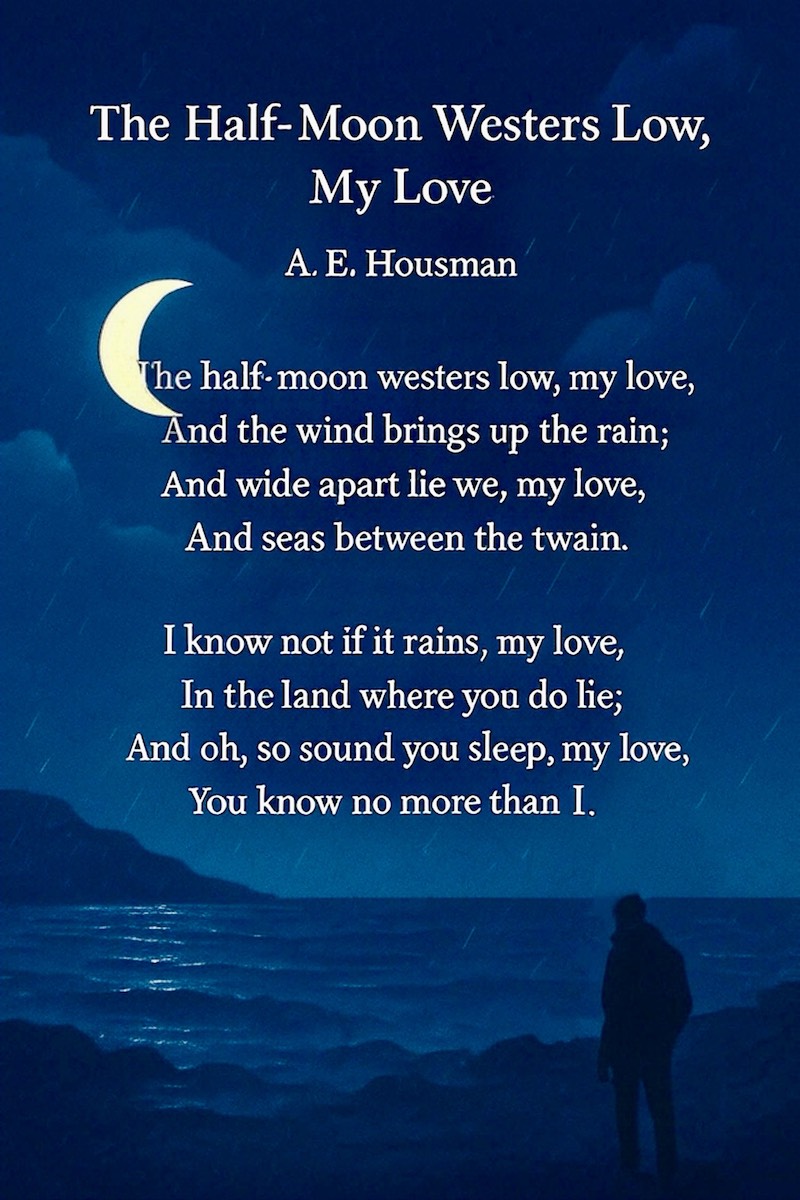
The half-moon westers low, my love,
The Insight: The Silence of the Grave
The core philosophical takeaway of this work is the absolute nature of the divide created by death. Housman highlights the tragedy of "unknowing"—the speaker cannot know the condition of his beloved, and the beloved, in the "sound sleep" of death, is equally oblivious to the world left behind.
Housman utilizes a rhythmic, repetitive structure that mirrors the relentless pulse of the ocean waves. The repetition of the phrase "my love" in every other line acts as a desperate anchor, a linguistic attempt to keep the connection alive despite the "seas between the twain." The word "westers" is particularly evocative, suggesting setting or sinking and a movement toward darkness and finality.
The second stanza shifts from the physical landscape to the mental landscape of mourning. By noting that his beloved sleeps so soundly that they "know no more than I," Housman suggests a bleak equality. Death has rendered the beloved's world a mystery to the living, while simultaneously stripping the beloved of all earthly concerns, including the very rain that the speaker currently feels.