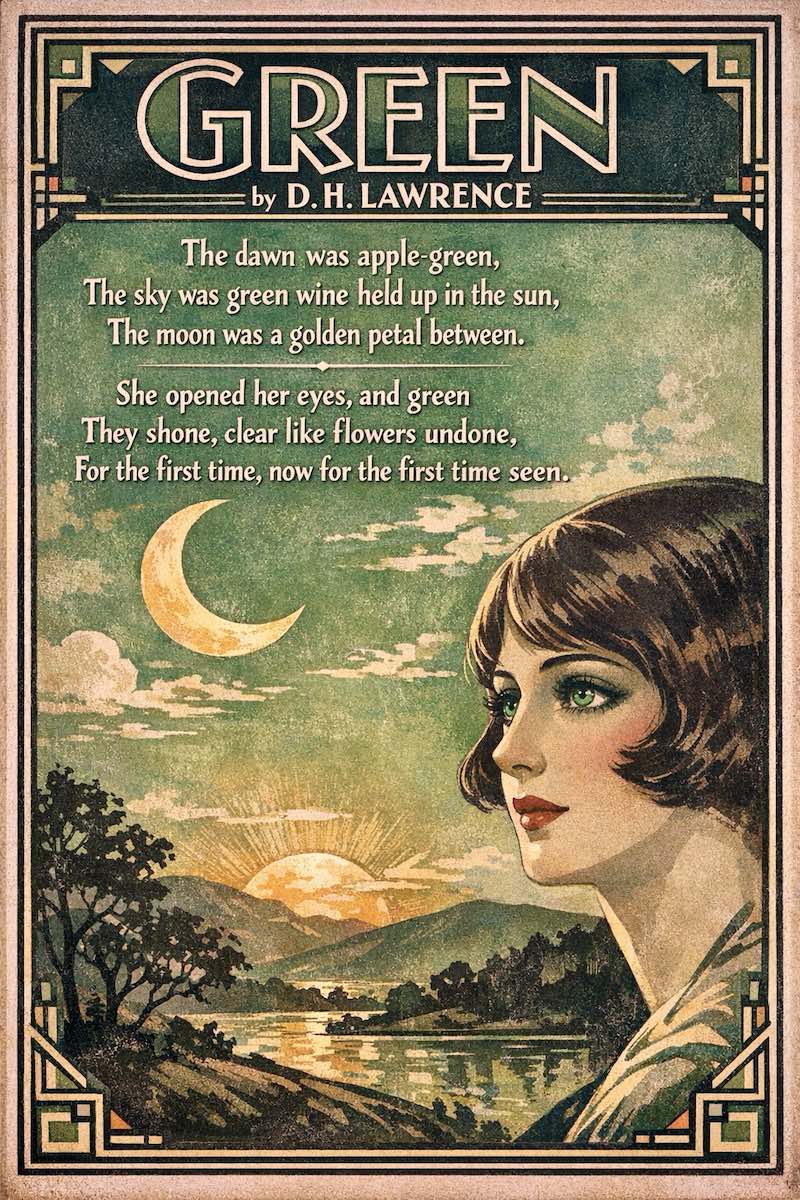
The Dawn of Perception: D.H. Lawrence’s "Green"
Published in 1917 as part of his collection Look! We Have Come Through!, "Green" captures D.H. Lawrence at his most lyrically vibrant. As a titan of 20th-century literature known for his exploration of human emotion and vitality, Lawrence uses this brief poem to celebrate a moment of profound awakening. It is a poem that bridges the gap between the natural world and the internal experience of new love.
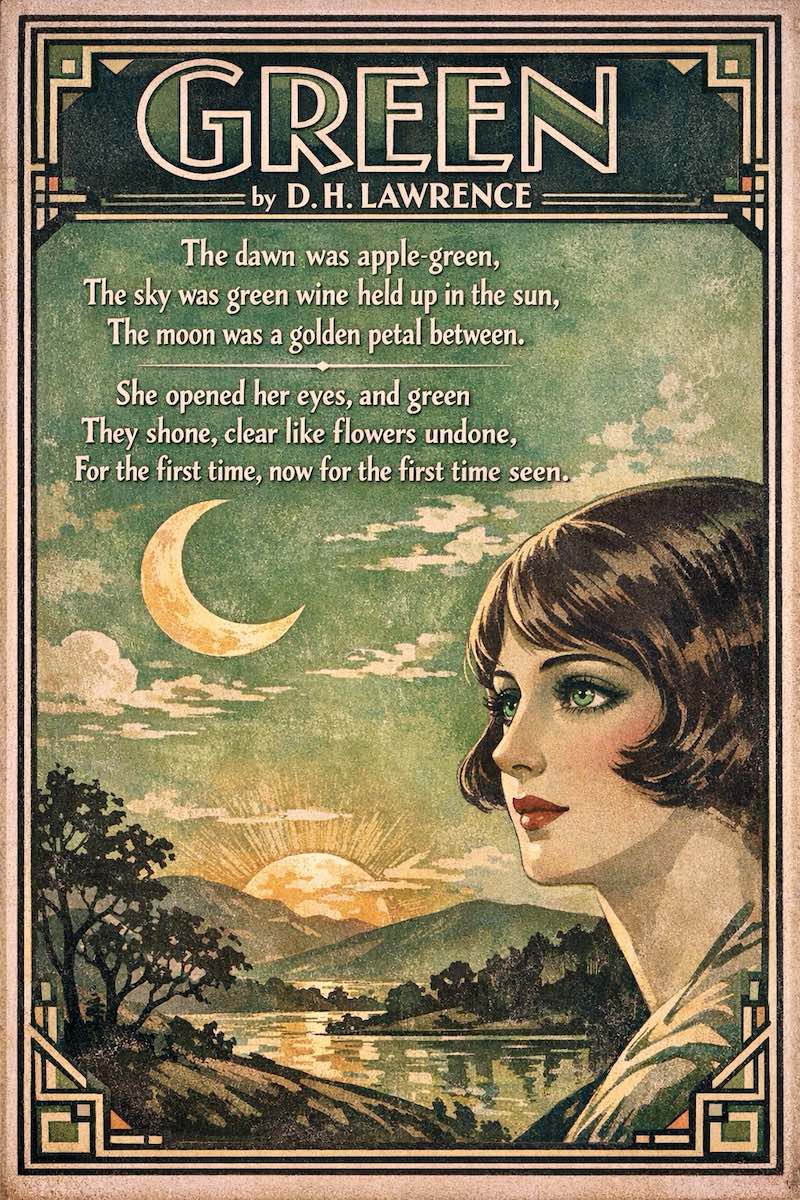
The Poem
The dawn was apple-green,
The sky was green wine held up in the sun,
The moon was a golden petal between.
She opened her eyes, and green
They shone, clear like flowers undone,
For the first time, now for the first time seen.
The Insight: The Freshness of Perception
The core philosophical takeaway of "Green" is the transformative power of a "first look." Lawrence suggests that through the eyes of another—or through the lens of new affection—the world is not just viewed, but reborn, shedding its mundane familiarities for a vivid, saturated reality.
Lawrence utilizes a striking color palette to unify the cosmos with the individual. By repeating the word "green" throughout both stanzas, he evokes a sense of spring, fertility, and nascent life. The metaphors in the first stanza—"apple-green" dawn and "green wine" sky—subvert our typical expectations of the horizon, suggesting a world that is intoxicating and nourishable.
The shift in the second stanza from the celestial to the human is seamless. By comparing the subject's eyes to "flowers undone," Lawrence employs delicate imagery to describe vulnerability and revelation. The meter is fluid, mirroring the soft transition from sleep to wakefulness. Ultimately, the poem’s impact lies in its finality: the idea that true perception makes the world feel "seen" for the very first time.