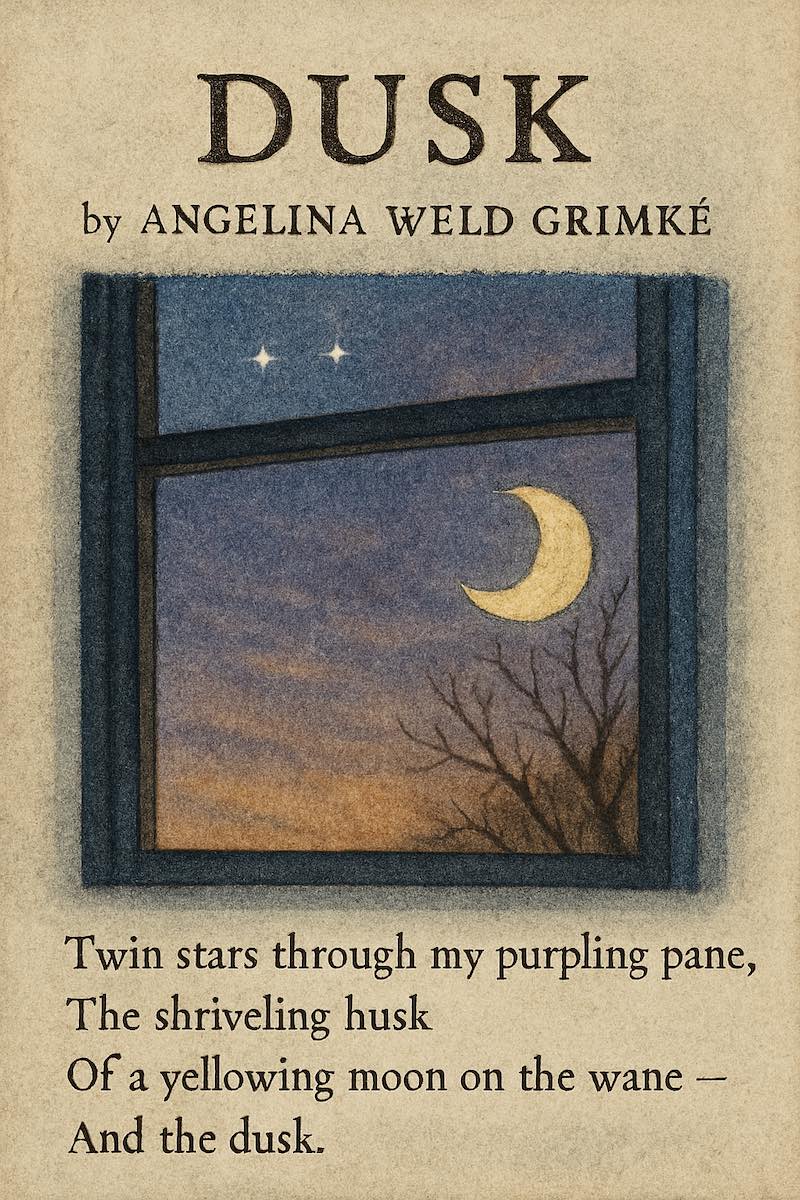
The Weight of Shadows: Angelina Weld Grimké’s "Dusk"
A prominent voice of the Harlem Renaissance, Angelina Weld Grimké was a master of the "color poem," using brief, vivid snapshots of the natural world to convey complex emotional states. First published in the early 1920s, "Dusk" is a quintessential example of her Imagist style—capturing a singular, fleeting moment where the physical world reflects a deeper, perhaps more somber, internal reality.
The Poem
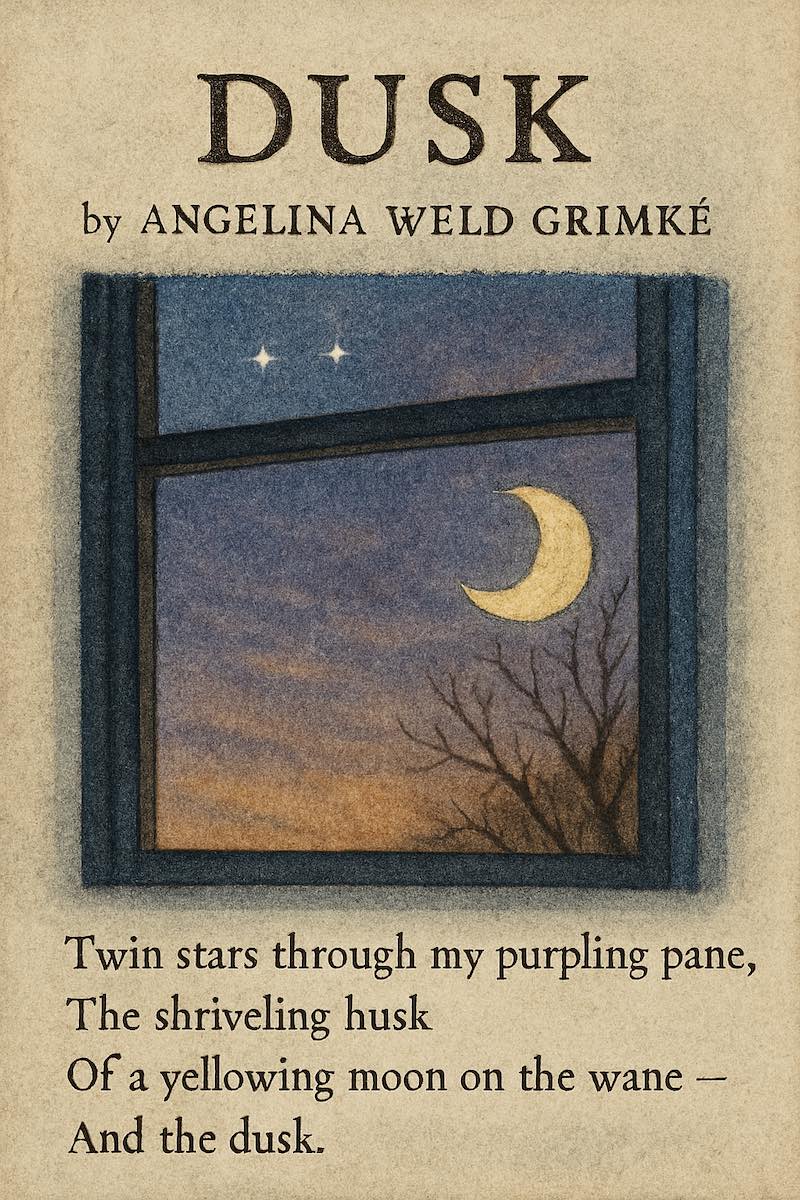
Twin stars through my purpling pane,
The shriveling husk
Of a yellowing moon on the wane —
And the dusk.
The Insight: The Beauty of Diminishment
The core "takeaway" of "Dusk" lies in its portrayal of transition and decay as a quiet, atmospheric event. Grimké suggests that there is a specific, haunting beauty in things that are fading—the "shriveling" moon and the "purpling" sky—inviting the reader to sit within the stillness of an ending.
Despite its brevity, "Dusk" is packed with sensory depth. Grimké uses the "purpling pane" to create a sense of enclosure; the speaker is observing the vast universe through a domestic filter, heightening the feeling of solitude. The choice of the word "husk" to describe the moon is particularly striking, personifying the celestial body as something organic that has been spent or emptied of its life force.
The poem’s structure mirrors the very process it describes. The lines shorten as we reach the end, physically mimicking the "waning" of the moon and the closing in of the night. The final line, "And the dusk," acts as a soft curtain call, leaving the reader in the very darkness the poem has spent its few words preparing for.