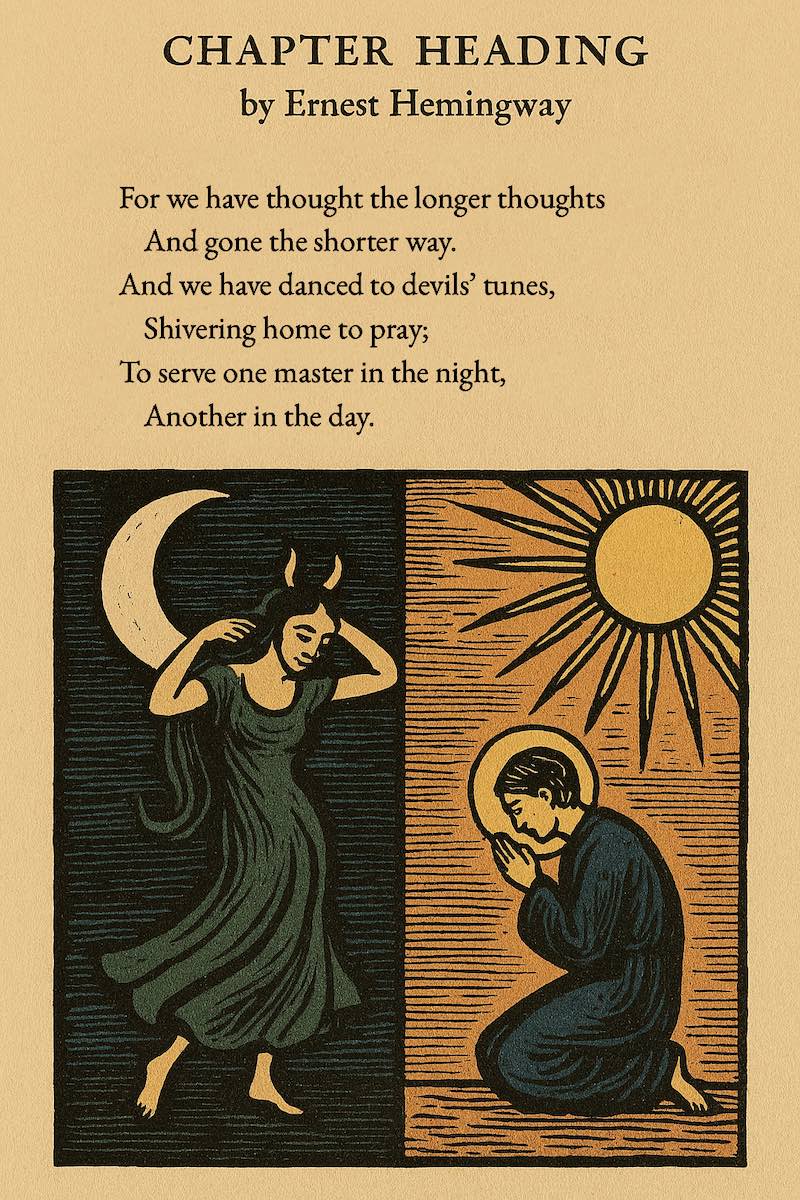
The Divided Soul: Ernest Hemingway's "Chapter Heading"
First published in 1923 in his rare debut book Three Stories and Ten Poems, "Chapter Heading" is a vivid example of a lesser-known side of Ernest Hemingway (1899–1961). Long before he became a giant of modern American fiction, Hemingway was a young expat living in Paris, encouraged to write poetry by none other than Ezra Pound. This tiny, 300-copy Paris run was actually funded by Robert McAlmon's Contact Publishing Company after Hemingway lost an entire suitcase of his manuscript drafts at a Paris train station. In this lean, six-line poem, Hemingway applies his signature economy of style to explore the conflicting urges and moral dualities that define human nature.
The Poem
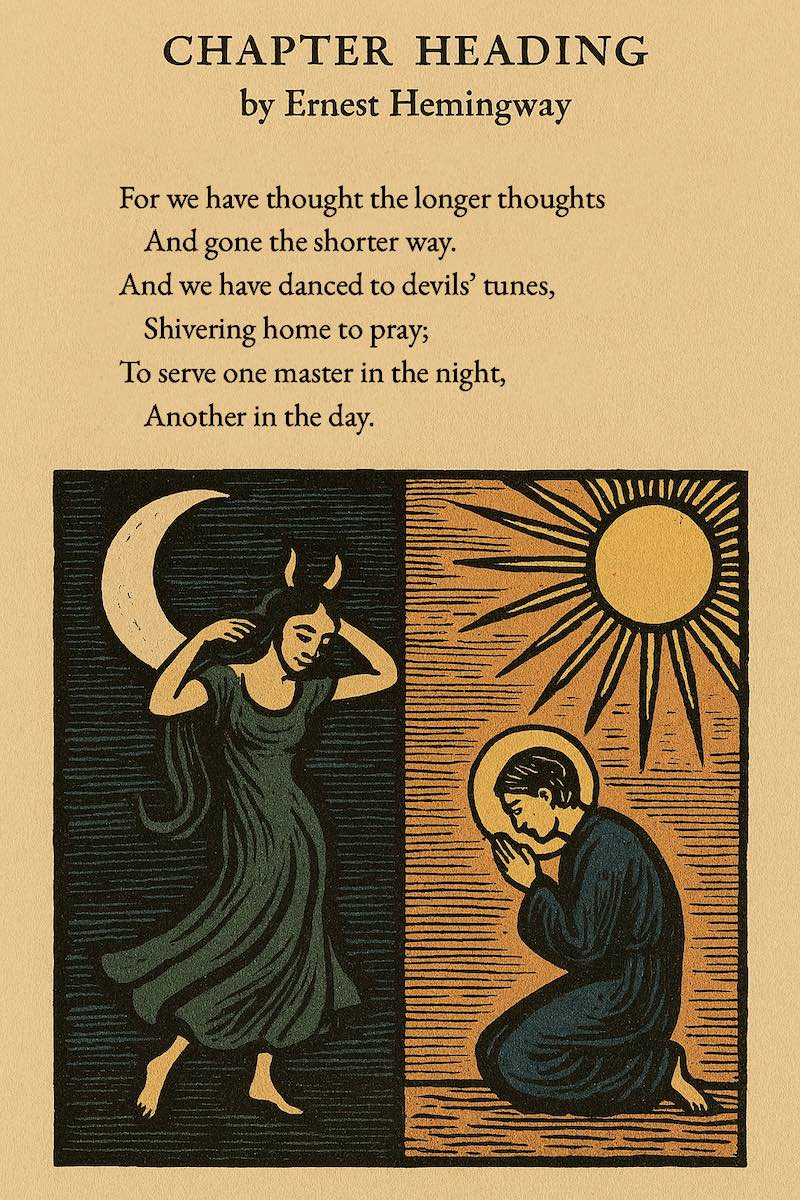
For we have thought the longer thoughts
And gone the shorter way.
And we have danced to devils’ tunes,
Shivering home to pray;
To serve one master in the night,
Another in the day.
The Insight: The Divided Soul
This sparse poem offers a stark look at the battle between indulgence and conscience. By illustrating how easily people cycle between nighttime desires and daytime repentance, Hemingway captures the hypocrisy and internal conflict that often lie just beneath the surface of daily life.
Hemingway opens with a sharp observation about human compromise, noting that despite having "thought the longer thoughts," we so frequently choose "the shorter way." This contrast between noble intentions and easy shortcuts sets the stage for the moral tug-of-war that follows.
In the remaining lines, the poem highlights a striking rhythm of guilt and desire. "Dancing to devils’ tunes" gives way to "shivering home to pray," painting a vivid picture of someone caught between two lives. Hemingway shows how effortlessly humanity accommodates dual realities, living under one set of rules in the dark and another under the light of day.