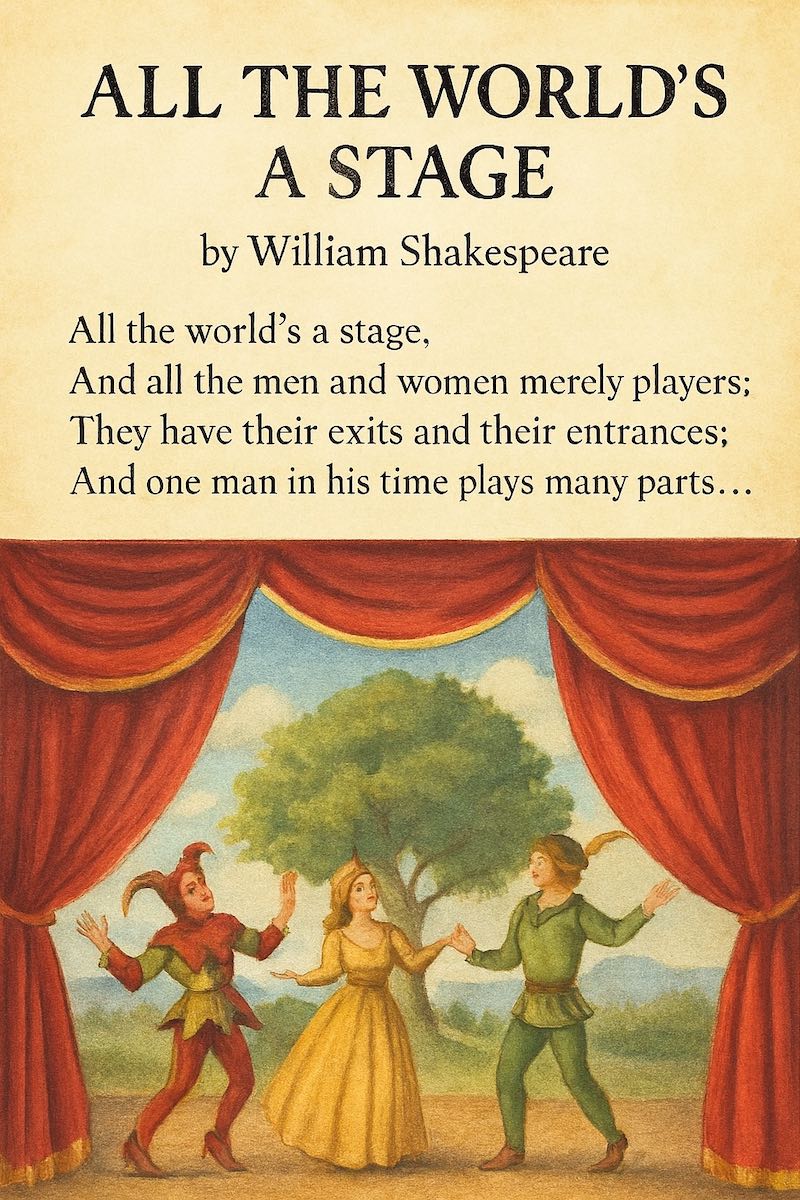
The Great Performance: Shakespeare’s "All the World’s a Stage"
William Shakespeare, the definitive voice of English literature, had a profound gift for using theatrical metaphors to explain the human condition. Perhaps his most famous instance of this is the monologue delivered by the melancholy Jaques in the comedy As You Like It. Written around 1599 and first published in the 1623 First Folio, these opening lines have become some of the most recognizable in history. In this focused excerpt for The Concise Verse, we examine the first four lines that set the scene for the "seven ages of man."
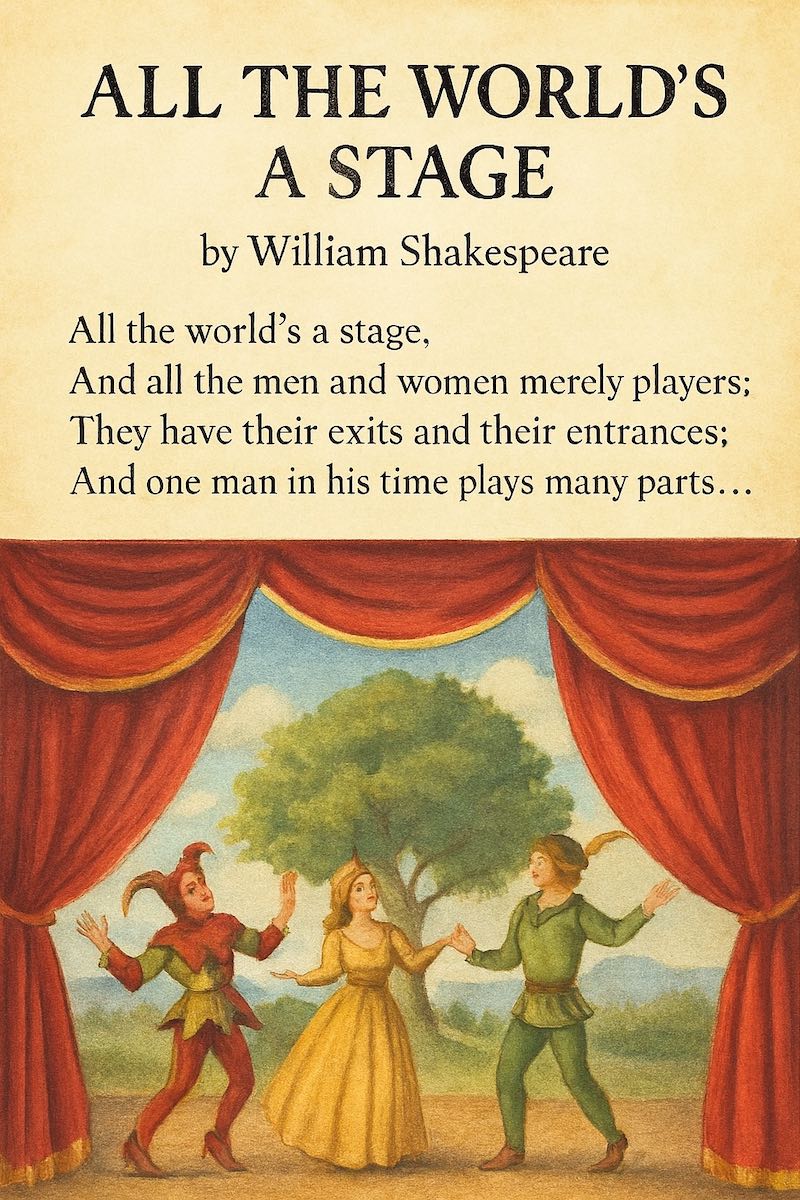
The Poem (Excerpt)
All the world’s a stage,
And all the men and women merely players;
They have their exits and their entrances;
And one man in his time plays many parts...
The Insight: The Universality of the Actor
The central "insight" of this passage is the dissolution of the self into a role. By declaring that men and women are "merely players," Shakespeare suggests that our social identities, our titles, and our grandest actions are often just performances dictated by the "stage" of life. It is a humbling perspective that views human existence as a series of scripted entries and exits rather than a permanent state.
Shakespeare masterfully uses the metaphor of the theatre to create a sense of shared human experience. By calling the world a "stage," he implies that there is an audience—perhaps divine, perhaps merely our fellow humans—watching our every move. The use of the word "merely" is particularly striking; it strips away human vanity, reducing even the most powerful figures to simple performers following a pre-ordained path.
The third line, "They have their exits and their entrances," serves as a concise euphemism for birth and death. By framing these monumental events as simple stage directions, Shakespeare highlights the transience of life. The final line of our excerpt, "And one man in his time plays many parts," introduces the idea of the "Seven Ages," suggesting that we are not static individuals but a collection of shifting roles—from the infant to the elder—each one as temporary as a costume change on a busy stage.