Starlight on the Plains: The Rugged Faith of Badger Clark’s "A Cowboy's Prayer"
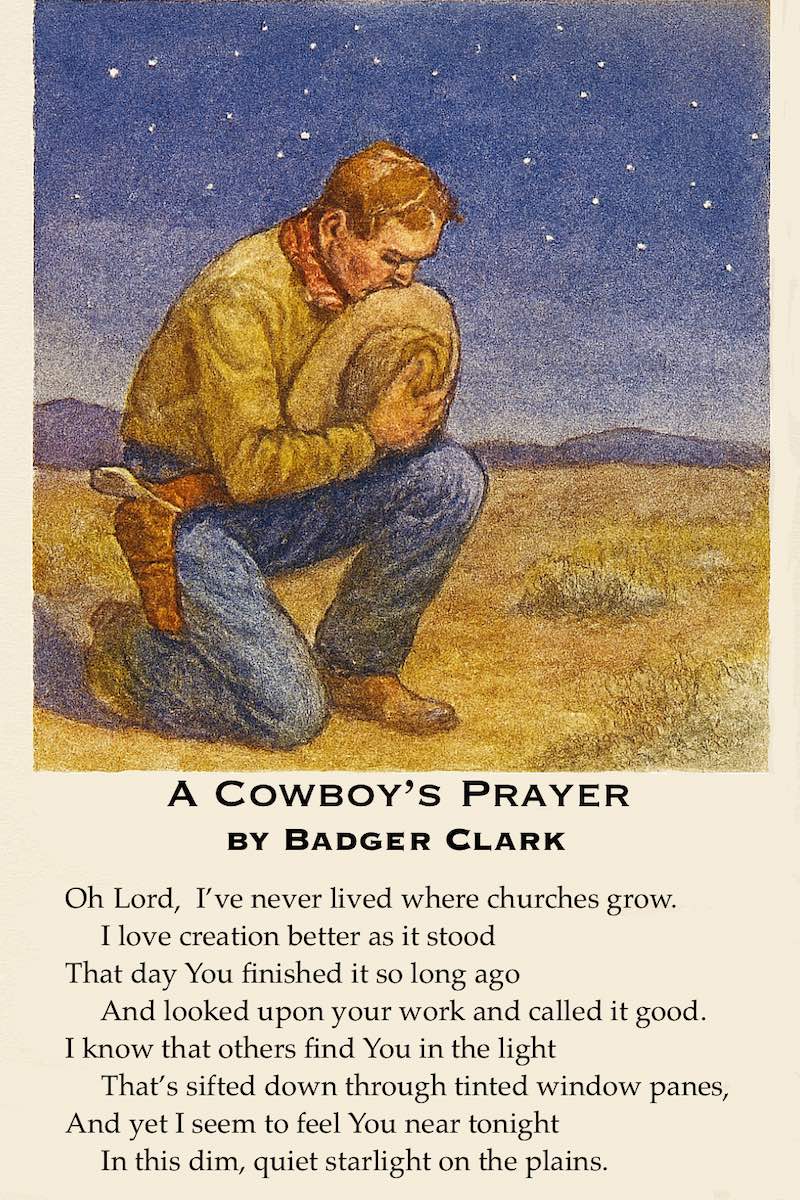
Badger Clark, the first Poet Laureate of South Dakota, captured the spirit of the American West with a voice that was both rugged and deeply reverent. His poem "A Cowboy's Prayer," first published in 1906, remains one of the most beloved pieces of "cowboy poetry" ever written. While the full poem is a longer meditation on a life lived on the range, this opening stanza captures the heart of that wilderness faith. It speaks to a spirituality found not in buildings, but in the vast, open cathedrals of the natural world, making it a perfect fit for The Concise Verse.
The Poem (Excerpt)
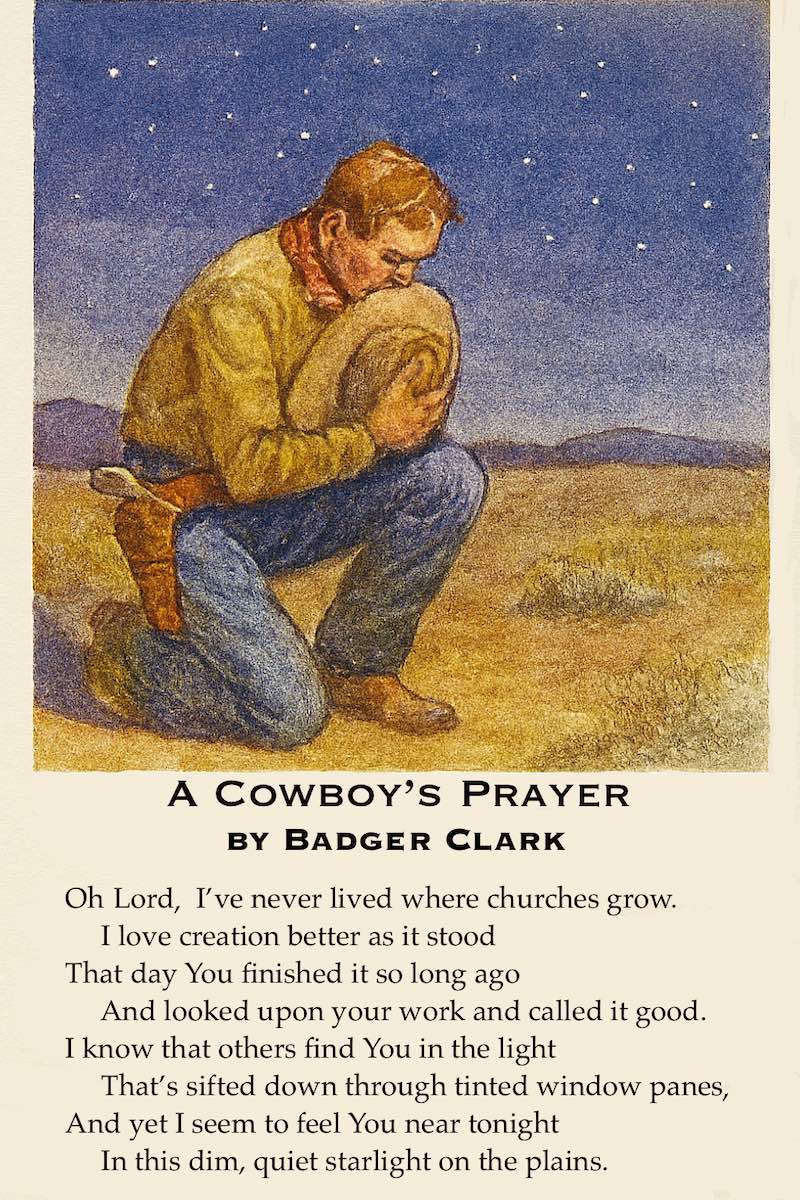
Oh Lord, I've never lived where churches grow.
I love creation better as it stood
That day You finished it so long ago
And looked upon Your work and called it good.
I know that others find You in the light
That's sifted down through tinted window panes,
And yet I seem to feel You near tonight
In this dim, quiet starlight on the plains.
The Insight: The Cathedral of the Wild
The central "insight" of this stanza is the rejection of religious formality in favor of natural immersion. Clark contrasts the "tinted window panes" of traditional churches with the "dim, quiet starlight" of the plains. He suggests that the most authentic way to connect with the divine is to stand within "creation... as it stood," finding God in the original, untouched work of the world.
Clark utilizes a rhythmic, traditional rhyme scheme (ABAB) that mirrors the steady, meditative pace of life on the range. The opening line—"I’ve never lived where churches grow"—instantly establishes the speaker as an outsider to urban civilization, framing nature as a living, growing thing that replaces the stone and glass of the city. By referencing the biblical idea of God looking at creation and calling it "good," Clark validates the cowboy’s rugged lifestyle as being in direct harmony with the earliest intentions of the Creator.
The second half of the stanza is a beautiful exercise in sensory contrast. Clark acknowledges that others find peace in the "sifted" light of a church, but he finds a more direct "feel" of the divine in the open air. The phrase "starlight on the plains" serves as a powerful concluding image, evoking a sense of vastness and solitude that is not lonely, but rather crowded with a quiet, holy presence. It is a poem that celebrates the dignity of a simple life lived under the stars.